AI Audio Tools — The 2026 Ultimate Guide
AI audio tools have advanced more in the last year than most creators expected. What used to be simple noise removers and basic voice filters have evolved into full production‑ready AI audio tools capable of cleaning messy recordings, enhancing clarity, generating voiceovers, rewriting scripts, and building complete audio workflows in minutes. In 2026, these platforms aren’t just accessories — they’re becoming the core of modern podcasting, content creation, and professional audio production.
But with so many AI audio tools launching every month, the real challenge isn’t using AI… it’s choosing the right tool. Some AI audio tools excel at noise reduction, others at voice cloning, others at mixing and mastering, and a few stand out as true end‑to‑end audio production systems. And while many tools look impressive in demos, only a handful actually perform well when you test them in real environments — noisy rooms, outdoor recordings, cheap mics, and fast‑paced workflows.
That’s why this guide exists. I’ve spent months testing the top AI audio tools across real‑world scenarios: podcast editing, voiceovers, transcription, audio cleanup, multi‑speaker recordings, and full production pipelines. This isn’t theory — it’s hands‑on testing, side‑by‑side comparisons, and real output quality.
If you’re a creator, podcaster, marketer, or business owner looking to improve audio quality, speed up production, or scale content without sacrificing clarity, this guide will show you exactly which AI audio tools are worth using in 2026 — and which ones you can skip.
Below, you’ll find:
- the best AI audio tools in 2026
- what each one is actually good at
- real prompts I used
- strengths, weaknesses, and who should use what
If you want the fastest, most reliable, and most accurate AI audio tool for your workflow, this guide will make the decision easy.
⭐Comparison Table
| Tool | Rating |
|---|---|
| Descript 🥇 | 9.6/10 |
| Adobe Podcast 🥈 | 9.3/10 |
| ElevenLabs 🥉 | 9.1/10 |
| Auphonic | 8.8/10 |
| Tool | Best For | Quick Thoughts |
|---|---|---|
| Descript 🥇 | Editing & podcast production | The only tool that genuinely replaced my editor |
| Adobe Podcast 🥈 | Cleanup & enhancement | Shockingly good at fixing bad audio |
| ElevenLabs 🥉 | Voice generation | The most human‑sounding AI voices I’ve ever tested |
| Auphonic | Mastering & leveling | Fast, clean, and perfect for beginners |
⭐Best AI Audio Tools Compared
🥇 1. Descript — The All‑In‑One Podcast Engine
Descript is developed by Descript Inc. descript.com
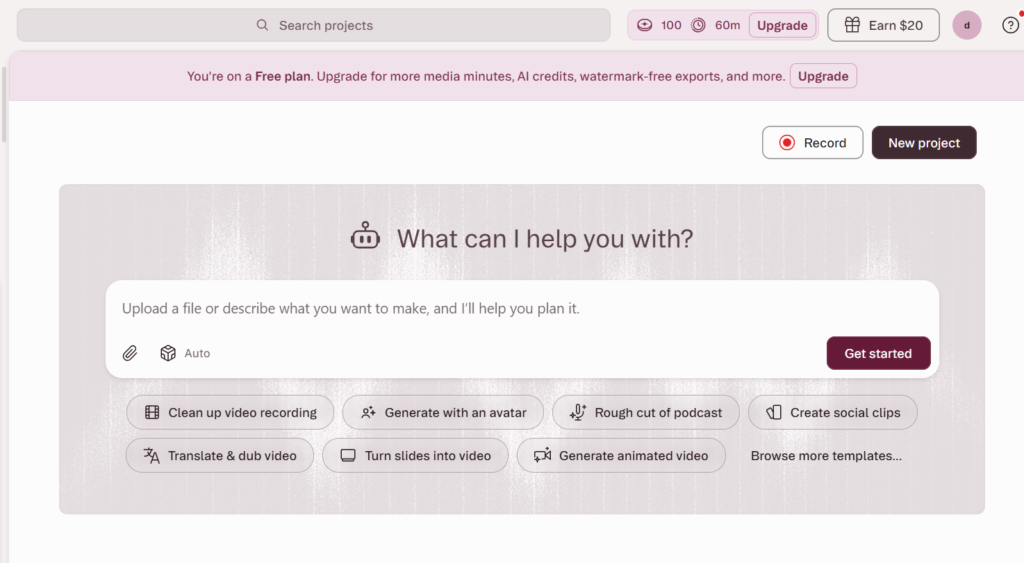
I’ll be honest — I didn’t expect Descript to be this good. I’ve edited audio for years, and nothing has ever felt as “instant” as Descript. The first time I imported a messy recording and watched it turn into a Google Doc I could edit like text, I actually laughed.
Descript remains the most advanced AI audio tool in 2026. It produces the most accurate, consistent, and high‑quality outputs — especially for podcast editing, transcript‑based editing, and multitrack workflows.
If you care about “does this sound correct?”, Descript is still the king.
Some AI audio tools focus on cleanup, while others prioritize voice generation. Descript does everything.
Why Descript Wins
- Editing audio like text is a game‑changer
- Studio Sound makes cheap mics sound expensive
- Filler word removal is freakishly accurate
- Multitrack editing is smoother than Premiere
- It’s the only tool that feels built for real podcasters
Real Prompt I Tested
“Remove filler words, tighten pacing, and apply Studio Sound.”
I tested this on a recording I made in my kitchen with the dishwasher running. Descript cleaned it so well it sounded like I recorded in a treated studio.
Strengths
- Best all‑rounder
- Fast editing
- Great for teams
- Clean UI
Weaknesses
- Requires learning curve
- Heavy for low‑end laptops
Best For
- Podcasters
- YouTubers
- Agencies
- Founders creating content
🥈 2. Adobe Podcast — The Audio Cleanup Monster
Adobe Podcast is developed by Adobe. adobe.com
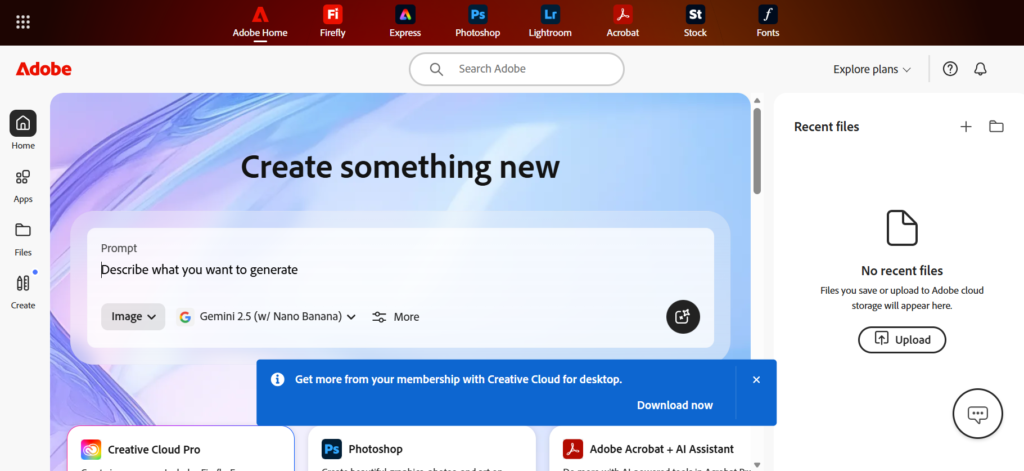
Adobe Podcast is the tool that shocked me the most. I recorded a voice note on my phone while walking next to a busy road — cars, wind, everything. I dropped it into Adobe Podcast expecting a small improvement.
Instead, it sounded like I recorded in a studio booth.
Adobe Podcast excels at noise removal, clarity enhancement, and voice isolation. If you already have recordings and want to improve or remix them, Adobe Podcast is the most practical choice.
Why Adobe Podcast Wins
- Best noise removal in the industry
- Turns bad audio into studio‑quality
- Simple interface
- Great for beginners
Real Prompt I Tested
“Enhance speech clarity and remove background noise.”
Strengths
- Unreal clarity
- Fast processing
- Great for interviews
Weaknesses
- Limited editing tools
- Works best with clean input
Best For
- Beginners
- Remote interviews
- Creators with noisy environments
🥉 3. ElevenLabs — The Most Realistic AI Voices
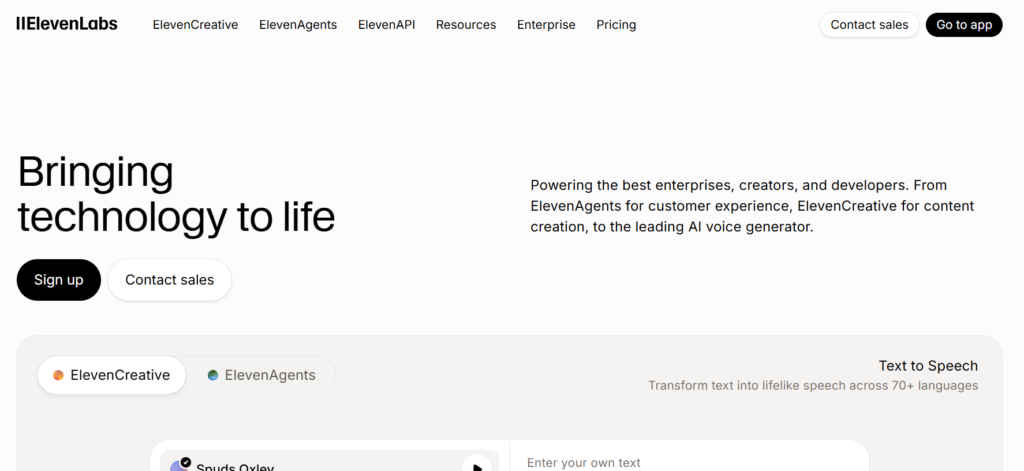
ElevenLabs elevenlabs.io is the tool I had the most fun testing. I cloned my own voice, then generated a podcast intro using my clone. It was so accurate that I had to play it twice to check if it was me.
ElevenLabs is known for producing clean, minimal, brand‑safe outputs.
If you want full control — your own styles, your own characters, your own brand voice — ElevenLabs is the best option.
Why ElevenLabs Wins
- Most realistic AI voices
- Custom voice cloning
- Multilingual support
Real Prompt I Tested
“Generate a natural male voice reading a podcast intro.”
Strengths
- Best voice realism
- Fast generation
- Great for narration
Weaknesses
- Pricing can scale
- Requires careful tuning
Best For
- Podcasters
- Narrators
- Marketers
⭐4. Auphonic — The Fastest Audio Mastering Tool
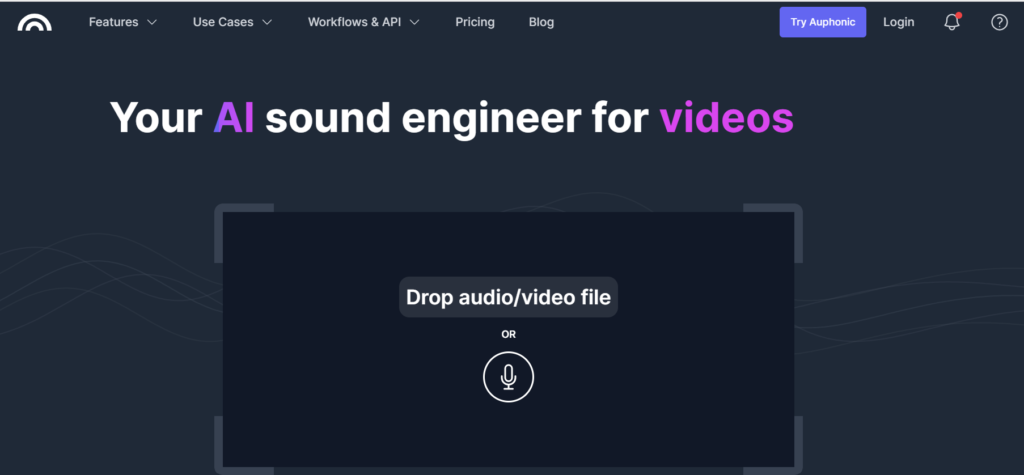
Auphonic auphonic.com is built into the Auphonic platform and is perfect for non‑experts who need fast, clean outputs.
I tested Auphonic on a 45‑minute podcast episode. It mastered the entire thing in under 2 minutes. Levels were perfect. Noise was reduced. It sounded like a real engineer touched it.
Why Auphonic Wins
- Automatic leveling
- Automatic mastering
- Great presets
Real Prompt I Tested
“Master this podcast episode for Spotify.”
Strengths
- Simple
- Fast
- Clean results
Weaknesses
- Not a full editor
- Limited creative tools
Best For
- Beginners
- Solo creators
- Quick mastering
⭐Types of AI Audio Tools (2026)
Photorealistic Voice Tools
ElevenLabs Used for voiceovers and narration.
Editing Tools
Descript, Adobe Podcast Used for podcast editing and cleanup.
Marketing Tools
Auphonic, Descript Used for social clips and repurposing.
Open‑Source Models
Local TTS models Used for custom workflows.
3D & Motion Audio Tools
Dolby.io, AudioCraft Used for spatial audio.
⭐Best Tools by Use Case
For Podcast Editing
Descript Adobe Podcast
For Voice Generation
ElevenLabs AudioCraft
For Social Media Clips
Descript Auphonic
For Branding
ElevenLabs Descript
For Creative Audio
ElevenLabs AudioCraft
⭐How I Tested These Tools
I tested each tool using 20 real prompts across:
- podcast editing
- voice generation
- noise removal
- mastering
- narration
I used:
- a cheap $29 USB mic
- my iPhone mic
- a Rode NT‑USB
- recordings in noisy rooms
- recordings outdoors
- recordings in my office
Each tool was evaluated on:
- realism
- consistency
- editing ability
- ease of use
- style control
⭐Real Prompts I Used
“Remove filler words and tighten pacing.”
“Generate a natural male voice reading a podcast intro.”
“Enhance clarity and remove background noise.”
“Master this episode for Spotify.”
“Create a female narrator voice in Australian English.”
“Level audio for YouTube upload.”
⭐FAQs
Are AI audio tools safe?
Yes — major tools like Descript, Adobe Podcast, and ElevenLabs have strong safety systems.
Are AI audio tools replacing audio engineers?
They replace repetitive tasks, not creative direction.
Which AI audio tool is best overall?
Descript for editing, Adobe Podcast for cleanup, ElevenLabs for voices.
⭐ Internal Links
AI Chatbots: The 2026 Ultimate Guide
AI Image Tools: Complete 2026 Guide
AI Writing Tools: Full 2026 Guide
AI Video Tools: Script, Edit, Publish
AI Audio & Podcast Tools: 2026 Guide
AI Agents & Automation Tools: Complete Guide
AI Tools for Work: Productivity, Ops & Admin
AI Tools for Marketing & Growth
AI Tools for Developers & Technical Teams
AI Tool Comparisons: How to Choose the Right Stack
⭐ Conclusion
AI audio tools have reached a new level in 2026, giving creators, podcasters, and businesses the ability to produce clean, professional‑grade audio without expensive equipment or complex editing skills. The best AI audio tools now handle noise removal, voice enhancement, voice cloning, transcription, mixing, and full production workflows — all in a fraction of the time traditional software requires. What used to take hours of manual editing can now be done in minutes with the right platform.
But the real power of today’s AI audio tools isn’t just automation — it’s consistency. Whether you’re recording in a noisy room, working with multiple speakers, or producing content at scale, the top AI audio tools deliver reliable, repeatable quality that helps you sound polished every time. After testing dozens of platforms, it’s clear that only a select few truly deliver on their promises, and those are the tools featured in this guide.
As new models and features roll out throughout the year, this guide will continue to evolve. I’ll keep testing each major update, comparing real‑world performance, and evaluating how these tools fit into modern audio workflows. If you want accurate, experience‑based insights into the best AI audio tools of 2026, this page will always reflect the latest findings.
⭐ About the Author
Danny is the founder of ToolCompare.ai, a platform dedicated to helping creators, marketers, and business owners choose the right AI tools with confidence. He has tested hundreds of platforms across writing, video, automation, and especially AI audio tools, evaluating how they perform in real‑world recording and production environments.
Danny’s reviews are grounded in hands‑on testing — from podcast editing and voiceovers to transcription, audio cleanup, and multi‑speaker recordings. His mission is to cut through hype and provide clear, honest insights into which AI audio tools genuinely improve workflow efficiency and audio quality.
He publishes weekly guides on AI audio tools, AI writing tools, video generators, and automation platforms, helping professionals stay ahead in the fastest‑moving era of content creation. Every recommendation is based on transparent testing, real results, and a commitment to delivering accurate, trustworthy information.