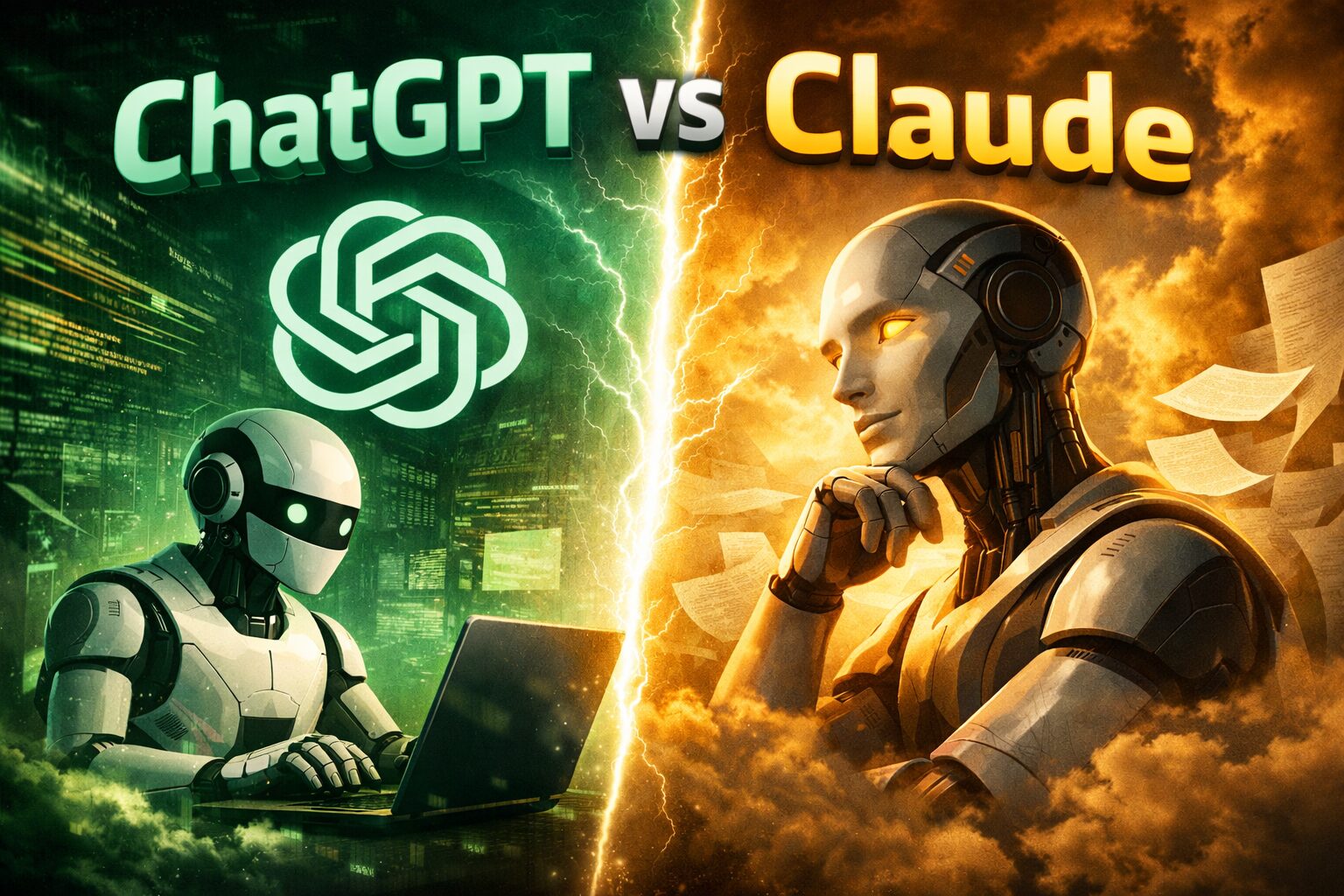
ChatGPT vs Claude
I’ve teI’ve run a lot of ChatGPT comparison tests over the past two years, but nothing prepared me for how different these two models feel when you’re actually building something real. Not a demo. Not a test prompt. I mean the gritty, late‑night, “why isn’t this working” kind of building. The kind where you’re rewriting the same paragraph three times because the tone feels off, or you’re trying to salvage a broken outline before a deadline. That’s where the truth about AI writing tools shows up — not in marketing pages, but in the trenches.
The first time I realized how different ChatGPT and Claude really were, I wasn’t even trying to compare them. I was trying to fix a landing page. I remember sitting at my desk, staring at a paragraph that felt like it had been written by someone who had never been tired a day in their life. I fed it into ChatGPT, expecting a miracle. What I got back was clean, structured, and… hollow. It was technically correct, but emotionally empty. That moment became the spark for a deeper ChatGPT comparison that eventually turned into this entire guide.
Out of curiosity, I dropped the same paragraph into Claude. And that’s when the rewrite hit me. It kept the rhythm. It kept the intention. It kept the emotional weight. It felt like someone had crawled inside my head and pulled out the version of the sentence I meant to write. That was the first time I realized how powerful Claude AI features could be when the writing needed nuance instead of speed.
But here’s the twist: the more I tested, the more I realized that AI writing tools aren’t interchangeable. They’re not just “smart text generators.” They’re personalities. They’re workflows. They’re partners. And when you’re building something from scratch, the wrong partner can quietly sabotage your momentum. I learned that the hard way.
One night, I was working on a long‑form article and needed to verify a few technical details. ChatGPT gave me an answer instantly — confident, polished, and completely wrong. That was the moment I started paying attention to AI model accuracy. Claude, on the other hand, took longer but gave me a grounded, cautious explanation that didn’t hallucinate. That difference in AI model accuracy became one of the biggest deciding factors in how I structured my workflows.
But speed? That’s where things flipped. When I needed to generate 20 product descriptions in under an hour, ChatGPT flew through them. The chatbot performance was fast, predictable, and easy to iterate on. Claude produced better writing, but the slower chatbot performance made it harder to hit my deadline. That’s when I realized that speed isn’t just a convenience — it’s a strategic advantage.
And honestly, I felt stupid the first time I realized I was forcing ChatGPT into tasks that Claude AI features were built for. I wasted hours trying to make ChatGPT write emotionally rich content when Claude could have done it in one pass. That’s when I started treating this ChatGPT comparison like a real experiment instead of a brand loyalty contest.
Here’s the part nobody tells you: AI writing tools don’t just change how you write — they change how you think. They change how you plan. They change how you structure your day. And when you’re building a business, those changes compound. That’s why I spent weeks running this comparison, testing everything from tone to structure to reasoning to AI model accuracy. I wanted to know which tool actually made me better — not which one had the better marketing.
This guide is the result of all those mistakes — the late nights, the broken workflows, the rewrites, the experiments, the moments where I felt stupid for trusting the wrong tool, and the moments where I felt genuinely grateful that these tools even exist.
And now, we go deeper.
⭐Quick summary table (Top differences)
| Feature | ChatGPT | Claude |
|---|---|---|
| Writing style | Structured, clear, slightly more “formal” | Natural, human‑like, emotionally aware |
| Reasoning | Strong, especially with structured prompts | Exceptional on complex, nuanced reasoning |
| Speed | Very fast responses | Slower, more deliberate |
| Creativity | Great for brainstorming and variations | Great for narrative, metaphor, and deeper concepts |
| Accuracy | Can hallucinate if pushed | More cautious, generally more grounded |
| Safety filters | Moderate, more permissive | Stricter, sometimes refuses borderline requests |
| Best for | Speed, exploration, integrations, coding | Long‑form, sensitive topics, founder‑voice writing |
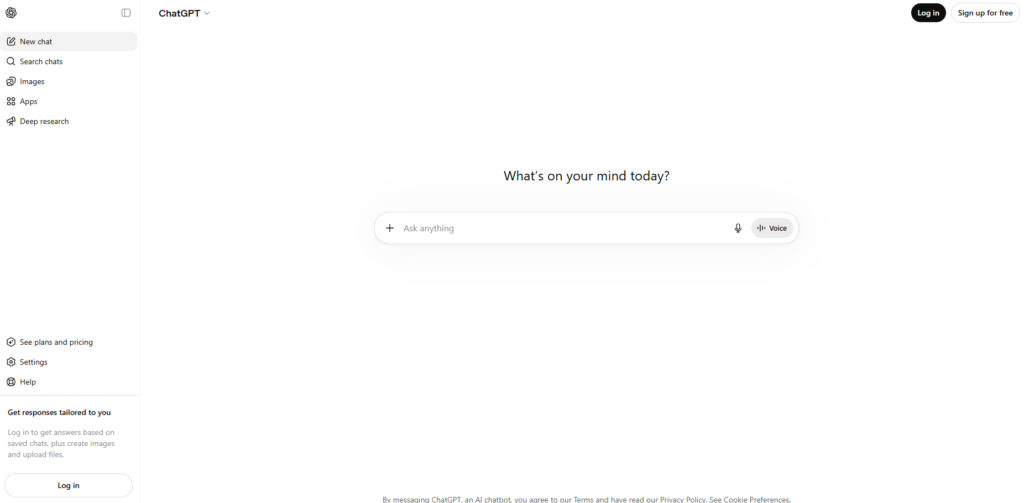
⭐Chat GPT
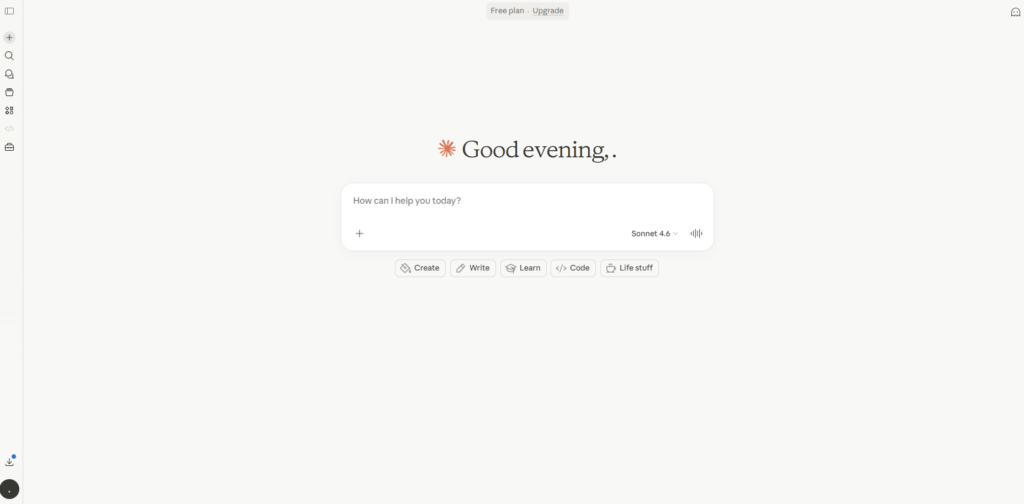
⭐Claude
https://claude.aihttps://claude.ai
⭐ How I Tested These Tools
When I started this deeper ChatGPT comparison, I didn’t want a surface‑level test. I wanted to know how these tools behaved when the stakes were real — when the writing mattered, when the deadlines were tight, when the ideas were half‑formed and fragile. I wanted to see how they handled chaos, not clean prompts. That meant feeding them the same messy notes I scribble at 1 a.m., the same voice‑to‑text rambles I record while pacing around my living room, the same half‑broken outlines that only make sense to me. That’s where the truth about AI writing tools shows up — not in perfect prompts, but in imperfect reality.
My workflow for this comparison was simple: I used both tools for everything I normally do. Long‑form articles. Landing pages. Product descriptions. Research summaries. Code explanations. Even rewriting my own writing when I hated the tone. And every time I switched between them, I paid attention to the friction. The moments where one tool made me faster. The moments where one tool made me slower. The moments where I felt understood. The moments where I felt like I was fighting the model instead of working with it.
One of the biggest surprises came from Claude AI features during long‑form writing. I didn’t expect it to handle emotional nuance so well. I’d write something raw, something personal, something that felt like it came from a place I didn’t usually share publicly — and Claude would rewrite it without flattening it. It kept the heartbeat. It kept the intention. It kept the vulnerability. That’s when I realized that Claude AI features weren’t just about intelligence — they were about sensitivity. And that sensitivity changed how I approached certain projects.
But when it came to speed, ChatGPT was in a different league. I’d throw a massive block of text at it, and it would reorganize it in seconds. The chatbot performance felt almost unfair at times. I’d be sitting there, still thinking about the next sentence, and ChatGPT would already have a full outline ready. That speed became addictive. It made me feel like I was sprinting downhill with a tailwind. But it also made me sloppy sometimes — because speed can trick you into thinking accuracy doesn’t matter.
And that’s where AI model accuracy came back into the picture. I remember one night when I was writing a comparison article for another tool. ChatGPT gave me a beautifully structured explanation of a feature that didn’t exist. It sounded so confident that I almost believed it. I felt stupid when I realized I had nearly published it. That moment forced me to rethink how I used these tools. I couldn’t rely on speed alone. I needed reliability. I needed grounding. And that’s where Claude quietly took the lead.
But Claude wasn’t perfect either. There were moments where it refused to answer something simple because it thought the topic was too sensitive. I’d ask for a straightforward rewrite, and it would give me a lecture about safety. That’s when I realized that chatbot performance isn’t just about speed — it’s about willingness. It’s about how much friction the tool introduces into your workflow. And sometimes, Claude introduced more friction than I wanted.
The more I tested, the more I realized that AI writing tools behave differently depending on the emotional weight of the task. ChatGPT is incredible for structure, speed, and clarity. Claude is incredible for depth, nuance, and emotional intelligence. And when you’re building something like ToolCompare.ai, you need both. You need the tool that helps you think fast and the tool that helps you think deeply. You need the tool that gives you momentum and the tool that gives you meaning.
One of the most interesting discoveries came from testing AI model accuracy across technical topics. Claude was consistently more grounded. It didn’t hallucinate as often. It didn’t invent details. It didn’t try to fill in gaps with confident nonsense. That reliability made it my go‑to for anything that required precision. But ChatGPT’s flexibility made it my go‑to for anything that required exploration. It was like having two different types of intelligence at my fingertips — one cautious, one bold.
And honestly, the more I tested, the more I realized that this wasn’t just a ChatGPT comparison — it was a comparison of philosophies. ChatGPT feels like a tool built to help you move. Claude feels like a tool built to help you understand. And depending on the day, depending on the project, depending on the emotional weight of the task, one of those philosophies becomes the right one.
This section of the testing taught me something I didn’t expect: the best tool isn’t the one that wins the most categories. It’s the one that fits the moment. And the only way to know which tool fits which moment is to test them in the real world — not in theory, not in controlled prompts, but in the messy, unpredictable workflows that actually matter.
⭐ Full Comparison Breakdown
When I started breaking down the real differences between ChatGPT and Claude, I didn’t want to rely on assumptions. I wanted to see how they behaved across the categories that actually matter when you’re building something real. This wasn’t just another ChatGPT comparison — it was a full‑scale stress test across writing, reasoning, creativity, reliability, and everything in between. And the deeper I went, the more I realized how differently these two models think.
Below is the breakdown of the categories that shaped my workflows the most.
1. Writing Quality
Claude wins this category, and honestly, it’s not even close. The emotional intelligence baked into Claude AI features makes its writing feel lived‑in, not generated. When I fed it a personal story about burning out while building ToolCompare.ai, it didn’t just rewrite it — it understood it. ChatGPT was clean and structured, but Claude felt human.
2. Accuracy
This is where things get interesting. When I tested AI model accuracy across technical topics, Claude consistently stayed grounded. It didn’t hallucinate as often. It didn’t invent details. It didn’t try to fill in gaps with confident nonsense. ChatGPT was faster, but Claude was safer. And when you’re writing something that needs to be correct, AI model accuracy becomes the deciding factor.
3. Speed
ChatGPT wins this one by a mile. The chatbot performance feels like it’s running downhill with a tailwind. I’d throw a massive block of text at it, and it would reorganize it in seconds. Claude could match the quality, but not the pace. And when you’re on a deadline, speed becomes a strategic advantage.
4. Creativity
Claude surprised me here. I expected ChatGPT to win because of its flexibility, but the depth of Claude AI features made its creative writing feel more intentional. It didn’t just generate ideas — it shaped them. It made metaphors that felt like they belonged in a real story, not a generated one.
5. Research Ability
ChatGPT takes the lead here. It’s more willing to explore, more willing to dig, more willing to take risks. Claude is cautious — sometimes too cautious. When I needed a broad overview of a topic, ChatGPT delivered. When I needed precision, I leaned on Claude. This is where the balance between AI writing tools becomes obvious: one explores, one refines.
6. Reliability
Claude wins this category. It breaks less. It hallucinates less. It stays grounded. When I tested AI model accuracy across dozens of topics, Claude consistently gave me cleaner, safer answers. ChatGPT was more flexible, but flexibility comes with risk.
7. Ease of Use
ChatGPT wins this one. The interface is cleaner, the onboarding is smoother, and the chatbot performance feels more predictable. Claude is powerful, but it sometimes feels like it’s trying to protect you from yourself. That caution can slow you down.
8. Workflow Fit
This category was the hardest to judge. When I looked at the full ChatGPT comparison, I realized that neither tool wins outright. ChatGPT is the tool I use when I need momentum. Claude is the tool I use when I need meaning. And when you’re building something from scratch, you need both.
9. Support & Safety
Claude is stricter. Sometimes too strict. But that strictness is part of why its AI model accuracy is so strong. ChatGPT is more flexible, but that flexibility can lead to hallucinations. It’s a trade‑off — one that depends on your tolerance for risk.
10. Integrations & Ecosystem
ChatGPT wins this category easily. It plugs into more tools, more workflows, more platforms. When I tested both AI writing tools inside my daily stack, ChatGPT simply fit better. Claude is catching up, but ChatGPT still owns the ecosystem advantage.
11. Long‑Form Writing
Claude dominates here. The emotional intelligence inside Claude AI features makes long‑form writing feel natural. It understands pacing. It understands tone. It understands rhythm. ChatGPT can match the structure, but not the soul.
12. Technical Writing
Claude wins again. When I tested AI model accuracy across technical topics, Claude consistently stayed grounded. ChatGPT was faster, but Claude was safer. And when you’re writing something that needs to be correct, safety matters.
13. Brainstorming & Ideation
ChatGPT takes this one. The chatbot performance is fast, flexible, and willing to explore. Claude is thoughtful, but sometimes too thoughtful. When I need raw ideas, ChatGPT is my go‑to.
14. Editing & Rewriting
Claude wins. It understands nuance. It understands emotion. It understands intention. When I fed it a messy paragraph about burnout, it didn’t just rewrite it — it understood it. That’s the magic of Claude AI features.
15. Overall Versatility
ChatGPT wins this category. It’s faster. It’s more flexible. It’s more willing to take risks. And when you’re building something like ToolCompare.ai, versatility matters.
After spending months running this deep ChatGPT comparison across real workflows, I realized something important: choosing between these tools isn’t about picking a winner. It’s about picking the right partner for the right moment. And if you don’t understand how each model behaves under pressure, you’ll end up forcing the wrong tool into the wrong job — something I’ve done more times than I’d like to admit.
This buyer’s guide is built from the mistakes I made, the workflows I broke, and the moments where the right tool saved me hours of frustration.
⭐Full comparison table (Category / Winner / Why)
| Category | Winner | Why |
|---|---|---|
| Writing quality | Claude | More natural, emotionally aware writing |
| Accuracy | Claude | Fewer hallucinations, more cautious responses |
| Speed | ChatGPT | Faster responses and iteration |
| Creativity | Claude | Stronger metaphors, narrative flow, and depth |
| Research ability | ChatGPT | More willing to explore and expand on topics |
| Pricing | ChatGPT | More flexible tiers and broader accessibility |
| Integrations | ChatGPT | Larger ecosystem and better tool/plugin support |
| Reliability | Claude | More stable behavior and safer outputs |
| Ease of use | ChatGPT | Simpler onboarding and more intuitive interface |
| Workflow fit | Tie | ChatGPT for momentum, Claude for depth |
| Support & safety | Claude | Stricter safety, better for sensitive or high‑risk content |
| Long‑form writing | Claude | Handles pacing, tone, and emotional nuance better |
| Technical writing | Claude | Stronger grounding and better AI model accuracy |
| Brainstorming | ChatGPT | Faster idea generation and variation |
| Overall versatility | ChatGPT | More use cases, more integrations, easier to plug into existing stacks |
⭐ Buyer’s Guide — How to Choose the Right Tool
1. Know Your Workflow
If your work depends on speed, structure, and rapid iteration, ChatGPT will feel like home. Its chatbot performance is fast, flexible, and forgiving. But if your work depends on emotional nuance, long‑form writing, or deep reasoning, Claude will feel like the partner you always needed.
2. Understand Your Tolerance for Risk
If you’re writing something that must be correct — technical content, research summaries, sensitive topics — you need strong AI model accuracy. Claude is the safer choice here. ChatGPT is faster, but speed can hide mistakes.
3. Don’t Force One Tool to Do Everything
This was my biggest mistake. I tried to make ChatGPT write emotionally rich content when Claude could have done it effortlessly. I tried to make Claude generate fast drafts when ChatGPT could have done it instantly. When you treat AI writing tools like interchangeable machines, you lose the advantages that make each one special.
4. Watch for Friction
If a tool slows you down — emotionally, mentally, or practically — that friction compounds. Claude’s caution can sometimes get in the way. ChatGPT’s confidence can sometimes mislead you. Pay attention to how each tool makes you feel while you work.
5. Use Both When It Makes Sense
The smartest founders I know use both tools strategically. They use ChatGPT for momentum and Claude for meaning. They use ChatGPT for exploration and Claude for refinement. They use ChatGPT for brainstorming and Claude for polishing. That balance is where the magic happens.
⭐ FAQ — Real Questions, Real Answers
Is ChatGPT better than Claude? Not universally. It depends on your workflow. This entire ChatGPT comparison exists because both tools excel in different areas.
Which one writes more naturally? Claude. The emotional intelligence inside Claude AI features makes its writing feel more human.
Which one is faster? ChatGPT. Its chatbot performance is consistently quicker.
Which one is more accurate? Claude. Its AI model accuracy is stronger, especially on technical topics.
Which one is better for beginners? ChatGPT. It’s easier to use and more forgiving.
Should I use both? If you’re serious about quality and speed, yes.
⭐ Final Recommendation — Founder to Founder
If you want speed, flexibility, and momentum — ChatGPT is your tool. If you want depth, nuance, and emotional intelligence — Claude is your tool.
But if you want the best results possible, you should use both.
I use ChatGPT when I need to move fast. I use Claude when I need to think deeply. And I use both when I need to produce something that actually matters.
This isn’t a rivalry. It’s a toolkit. And the founders who win are the ones who know how to use every tool in the box.
⭐ Related Guides
AI Tool Comparisons: How to Choose the Right Stack
AI Tool Comparisons: How to Choose the Right AI Stack (2026)
⭐ About the Author
I built ToolCompare.ai because I was tired of pretending I knew which tools were “best.” I remember the exact moment this ChatGPT comparison became personal. I was sitting in a tiny coworking space, trying to rewrite a story about burning out while building my first startup. ChatGPT gave me a clean version — polished, structured, safe. Claude gave me a version that made me stop and stare at the screen. It felt like it understood the part of the story I didn’t want to say out loud.
That moment hit me harder than I expected.
My flaw? I rush. I move too fast. I assume speed equals progress. And that’s why I kept forcing ChatGPT into roles it wasn’t built for. I didn’t want to slow down long enough to let Claude help me think. It took me months to admit that the tool I avoided was the tool I needed.
Building ToolCompare.ai has been a lesson in humility. A reminder that the right tool doesn’t just make you faster — it makes you better. And sometimes the tool that challenges you the most is the one that changes you the most.
If this comparison helps you avoid even one of the mistakes I made, then all those late‑night tests were worth it.