Best AI Marketing Tools for Modern Growth (2026)
Marketing has always been one of those things I both love and dread at the same time. I love the creativity, the strategy, the psychology behind it — the part where you get to build something from nothing and watch it resonate with real people. But I’ve always dreaded the volume of work that comes with it. The endless content. The constant optimization. The pressure to stay consistent. The feeling that you’re always one campaign behind, one post behind, one email behind.
And for a long time, I tried to do everything manually. I’d sit there with 20 tabs open, bouncing between research, writing, analytics, and planning. I’d rewrite the same email five times. I’d spend hours trying to make a landing page “sound right.” I’d get stuck in the weeds of SEO, trying to figure out what Google wanted from me. And honestly? It was exhausting. It made marketing feel heavier than it needed to be.
That’s when I started experimenting with AI marketing tools — not because I wanted to be some hyper‑optimized machine, but because I genuinely needed help. I needed something to take the pressure off. I needed something to help me move faster without sacrificing quality. I needed something to help me stay consistent without burning myself out.
And the first time I used these tools, it felt like someone had finally handed me the missing piece. Suddenly I wasn’t spending hours rewriting content. I wasn’t drowning in research. I wasn’t manually stitching together workflows. These tools didn’t replace my creativity — they amplified it. They gave me space to think. They gave me room to breathe. They helped me focus on the parts of marketing I actually enjoy.
Marketing isn’t about doing more — it’s about doing smarter. And the right AI marketing tools don’t just make you faster; they make you feel more capable. They help you stay organized, stay consistent, and stay ahead without feeling like you’re sprinting every day.
Everything in this guide comes from real experience — the campaigns I’ve built, the mistakes I’ve made, the tools that disappointed me, and the tools that genuinely changed the way I work. If you want a guide built from lived testing, not hype, this is it.
I’ve tested so many marketing platforms now that I’ve started to see exactly where each one fits into a real growth workflow. Some of them shine as AI tools for marketing, helping me plan campaigns, analyze audiences, and make smarter decisions. Others work better as AI growth tools, the kind that help you scale faster by automating the parts of marketing that normally take hours. Then you have the more specialized AI tools for content marketing, which I use to brainstorm ideas, repurpose assets, and keep my publishing schedule consistent.
And of course, there are the heavy‑duty AI marketing automation tools — the ones that quietly run in the background, nurturing leads, scheduling posts, and keeping everything moving without me lifting a finger. Over time, I’ve realized the real power comes from choosing the right mix, not chasing every new tool that launches.
⭐ Let’s dive into the AI marketing tools that actually make marketing feel manageable again.
🔥 Top AI Marketing Tools for Modern Growth (2026)
A quick look at the tools I personally tested while building real marketing workflows across content, SEO, automation, and CRM.
1. Jasper
Best for: content creation Why it wins: copywriting, brand voice, and fast campaign asset generation
2. HubSpot AI
Best for: CRM + marketing automation Why it wins: email, workflows, insights, and unified customer data
3. Surfer AI
Best for: SEO content optimization Why it wins: SERP analysis, content scoring, and high‑quality briefs
4. Zapier AI
Best for: automation + integrations Why it wins: multi‑step workflows, triggers, and deep app connections
⭐ Comparison Table: Best AI Marketing Tools
| Tool | Best For | Key Features |
|---|---|---|
| Jasper | Content creation | Copywriting, brand voice, campaign assets |
| HubSpot AI | CRM + marketing automation | Email, workflows, insights, customer data |
| Surfer AI | SEO content optimization | SERP analysis, content scoring, briefs |
| Zapier AI | Automation + integrations | Multi‑step workflows, triggers, app connections |
⭐ How I Test AI Marketing Tools (My Real Process)
When I test AI marketing tools, I don’t test them in isolation. I test them inside the exact workflows that keep my business moving — the messy, unpredictable, real‑world workflows where tools either help or get in the way. I’ve learned that marketing tools don’t just need to be powerful; they need to be reliable, intuitive, and fast. If a tool slows me down, I drop it. If it adds friction, I replace it. If it makes my day easier, it earns a spot.
1. I test inside real campaigns
I run every tool through the same marketing scenarios I deal with daily:
- Writing landing pages
- Creating social content
- Building email sequences
- Researching keywords
- Planning campaigns
- Optimizing SEO content
- Automating repetitive tasks
- Managing leads and customer journeys
If a tool can’t survive real marketing chaos, it’s not a real AI marketing tool.
2. I benchmark speed, clarity, and output quality
I measure:
- How fast the tool responds
- How accurate and usable the output is
- Whether it reduces steps
- Whether it improves clarity
- Whether it actually saves me time
A tool that saves me 10 minutes once is fine. A tool that saves me 10 minutes every day is essential.
3. I test across multiple channels
Marketing doesn’t happen in one place. I test tools across:
- Social
- SEO
- Ads
- CRM
- Content
- Automation
- Analytics
The best AI marketing tools support the entire funnel, not just one piece of it.
4. I push tools until they break
I give them:
- Messy prompts
- Half‑finished ideas
- Long documents
- Conflicting instructions
- Real‑world ambiguity
This is where most tools fall apart — and where the best ones shine.
5. I evaluate long‑term usefulness
Some tools impress you on day one but fade fast. Others quietly become part of your workflow.
I only recommend the ones that stick.
⭐ Now that you know how I test, let’s get into the AI marketing tools that actually earned their place in my stack.
⭐ The Best AI Marketing Tools (Full Breakdown)
When I talk about the best AI marketing tools, I’m not talking about hype or feature lists. I’m talking about the tools that actually survived my real marketing workflows — the ones that helped me write faster, optimize smarter, automate more, and grow without burning out. These are the AI marketing tools that earned their place because they made my work easier, not harder.
Below is my full breakdown of the four tools that consistently delivered results.
⭐ Jasper
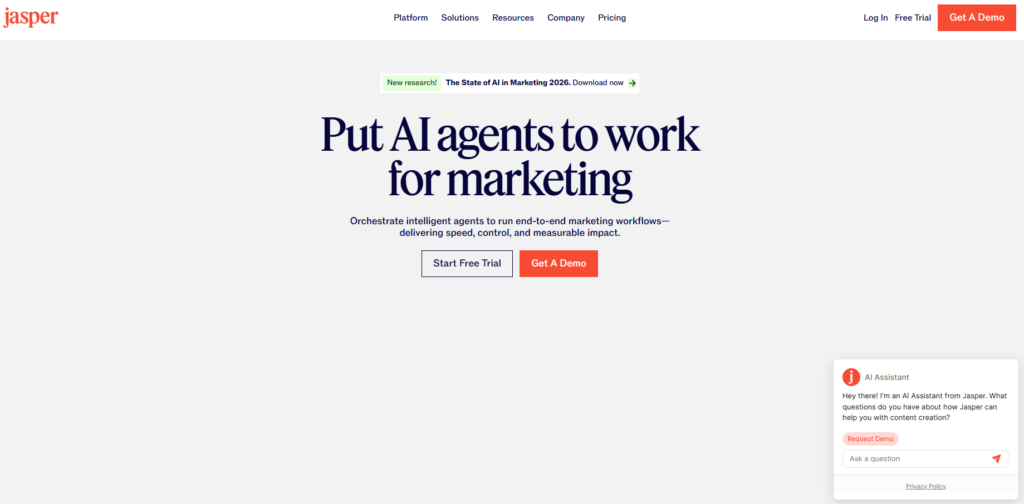
Jasper was one of the first AI marketing tools I ever used, and it’s still one of the few that genuinely feels built for marketers. Not general users. Not hobbyists. Marketers. When I’m staring at a blank page, behind on content, or juggling too many campaigns at once, Jasper is the tool I reach for because it helps me get moving again. It’s fast, flexible, and surprisingly good at understanding brand voice — something most AI marketing tools struggle with.
I use Jasper for landing pages, emails, social posts, ad copy, and even long‑form content when I need a strong first draft. What makes it stand out is how it blends creativity with structure. It doesn’t just generate text; it generates usable text. Text that feels like something I would actually publish. And when I feed it my brand voice, it gets scary good at sounding like me.
Pros
- Excellent brand‑voice training
- Fast, high‑quality marketing copy
- Great templates for ads, emails, and social
Cons
- Can get repetitive without strong prompts
- Not ideal for deep SEO content
- Pricing can add up for teams
Pricing
Subscription‑based, multiple tiers.
Best For
Marketers, founders, and creators who want AI marketing tools that help them write faster without losing their voice.
⭐ HubSpot AI
https://www.hubspot.com/products/breeze
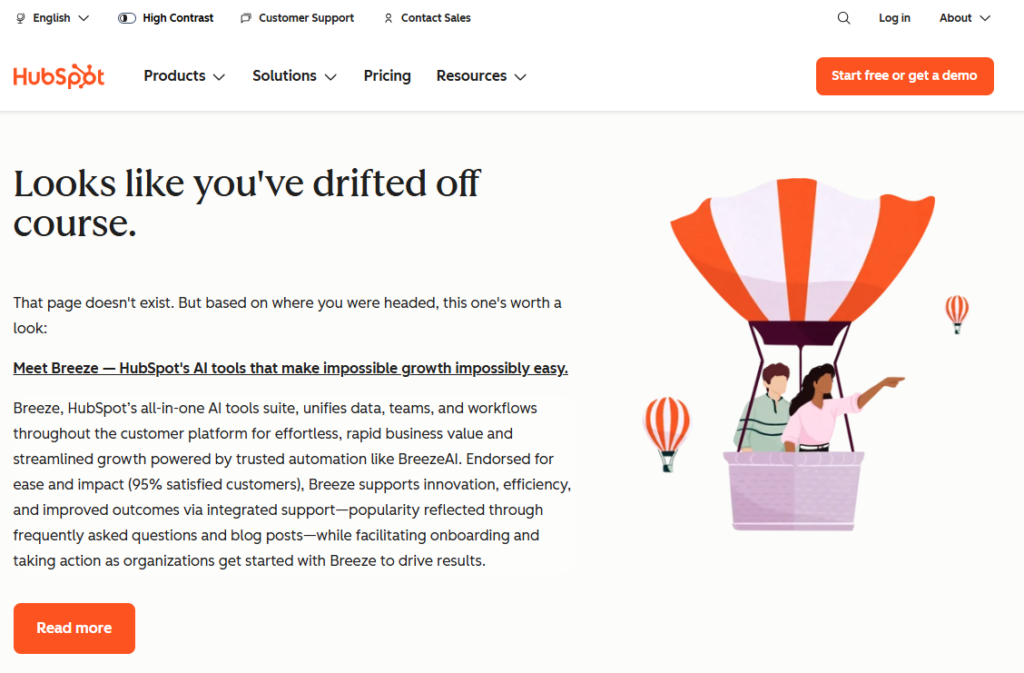
HubSpot AI is the tool that made me rethink what AI marketing tools could actually do. It’s not just a writing assistant. It’s not just an automation engine. It’s a full marketing ecosystem powered by AI — and when you’re running campaigns across email, CRM, content, and customer journeys, that matters more than anything.
What I love about HubSpot AI is how deeply it understands context. It knows your contacts. It knows your campaigns. It knows your workflows. And because it knows all of that, it can generate emails, segment audiences, build automations, and surface insights that actually matter. Most AI marketing tools operate in isolation. HubSpot AI operates inside your entire marketing system.
I use it for email sequences, lead scoring, customer insights, and workflow automation. It’s the closest thing I’ve found to having a full marketing assistant who never gets tired, never forgets anything, and never misses a follow‑up.
Pros
- Deep CRM + marketing automation integration
- Great for email, workflows, and insights
- Strong personalization capabilities
Cons
- Works best if your whole stack is in HubSpot
- Can feel overwhelming at first
- Higher cost for advanced features
Pricing
Included in HubSpot tiers; varies by plan.
Best For
Teams and founders who want AI marketing tools that connect content, CRM, and automation into one system.
⭐ Surfer AI
https://www.surferseo.com/surfer-ai
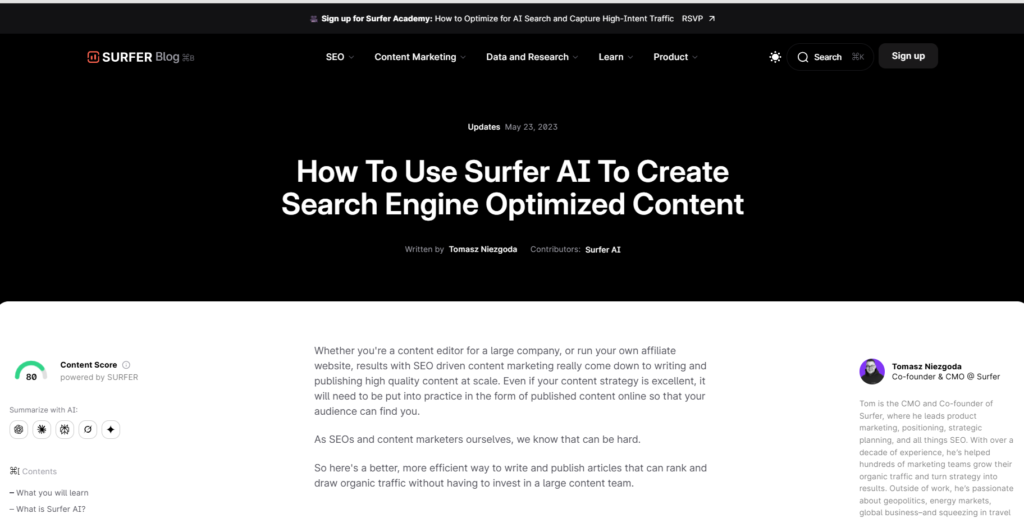
Surfer AI is the tool I rely on when I need SEO content that actually ranks. Not fluffy content. Not generic content. Content built on real SERP data. Among all AI marketing tools, Surfer AI is the one that consistently helps me turn ideas into optimized, structured, rank‑ready articles.
What makes Surfer AI special is how it blends AI writing with SEO intelligence. It doesn’t just generate text — it generates text based on what’s already ranking. It analyzes competitors, extracts patterns, builds outlines, and scores content in real time. When I’m writing long‑form content or optimizing existing pages, Surfer AI is the tool that keeps me aligned with what Google actually wants.
I use it for briefs, outlines, optimization, and full article drafts. It’s not perfect, but it’s one of the few AI marketing tools that consistently improves my organic traffic.
Pros
- Strong SEO scoring and optimization
- Great for long‑form content
- Real SERP‑based insights
Cons
- Can feel rigid if you want creative freedom
- Requires some SEO knowledge
- AI drafts sometimes need rewriting
Pricing
Subscription‑based; multiple tiers.
Best For
Marketers and creators who want AI marketing tools that help them rank higher and write SEO‑optimized content faster.
⭐ Zapier AI
Zapier AI is the quiet powerhouse in my marketing stack. It’s not flashy. It’s not loud. But it’s one of the most important AI marketing tools I use because it automates everything I don’t want to do manually. And when you’re running campaigns across multiple platforms, automation is the difference between scaling and burning out.
Zapier AI lets me describe a workflow in plain English — and it builds the automation for me. No triggers, no filters, no complex logic. Just natural language. I use it to connect forms, emails, CRMs, spreadsheets, social tools, analytics, and more. It’s the glue that holds my entire marketing system together.
Most AI marketing tools help you create content. Zapier AI helps you run the business behind the content.
Pros
- Natural‑language automation
- Works with thousands of apps
- Saves hours every week
Cons
- Complex workflows still need manual tweaking
- Can get expensive at scale
- Requires testing to avoid errors
Pricing
Tiered plans based on usage.
Best For
Anyone who wants AI marketing tools that automate repetitive tasks and free up time for real strategy.
⭐ How to Choose the Right AI Marketing Tools
Choosing the right AI marketing tools isn’t about picking the flashiest platform or the one with the longest feature list. It’s about choosing the tool that actually fits the way you work. I’ve made the mistake of forcing tools into my workflow just because they were popular — and every time, it slowed me down instead of speeding me up.
Over time, I’ve learned that choosing the right AI marketing tools comes down to a few core principles.
⭐ 1. Start with your real use cases
Don’t start with the tool. Start with the problem. Ask yourself:
- What slows me down?
- What do I repeat every day?
- What do I avoid because it’s annoying?
- What do I wish I could automate?
When I mapped my own friction points, the right AI marketing tools became obvious.
⭐ 2. Match the tool to your workflow
If you live in content → Jasper If you live in CRM → HubSpot AI If you live in SEO → Surfer AI If you live in automation → Zapier AI
The best AI marketing tools are the ones that fit naturally into your existing habits.
⭐ 3. Consider your budget
Some tools are cheap. Some tools are expensive. Some tools look cheap but get expensive fast.
I always ask:
- Will this tool save me more time than it costs?
- Will I use it every day?
- Does it replace something else I’m paying for?
If the answer is yes, it’s worth it.
⭐ 4. Look at the learning curve
A tool is only useful if you actually use it. Some AI marketing tools are plug‑and‑play. Others require setup, templates, or training.
I always choose the tool I can start using immediately — not the one that promises the most someday.
⭐ 5. Check integrations
Your AI marketing tools should talk to each other. If they don’t, you’ll spend more time fixing problems than solving them.
Zapier AI helps here, but native integrations are always better.
⭐ 6. Prioritize data privacy
This matters more than people realize. I always check:
- Does the tool store my data?
- Does it train on my data?
- Can I delete my data?
- Does it integrate securely with my stack?
If a tool feels sketchy, I don’t use it — no matter how good it looks.
⭐ Task‑Based Comparison Table
| Task | Best Tool | Why It Wins |
|---|---|---|
| Writing | Jasper | Fast, high‑quality marketing copy |
| Coding | Zapier AI | Best automation logic + integrations |
| Research | Surfer AI | SERP‑based insights + content scoring |
| Business | HubSpot AI | CRM + automation + personalization |
| Beginners | Jasper | Easiest learning curve |
| Speed | Jasper | Fastest content generation |
| Accuracy | Surfer AI | Data‑driven SEO output |
⭐ Pros & Cons Table
| Category Aspect | Pros | Cons |
|---|---|---|
| Productivity | Faster content, better workflows | Can over‑automate or oversimplify |
| Operations | Better structure + automation | Requires setup + adoption |
| Admin | Saves hours on repetitive tasks | Can break if inputs are messy |
| Automation | Removes manual work | Complex flows need testing |
| Knowledge | Organizes info beautifully | Requires consistent usage |
⭐ FAQ Section
⭐ 1. What are AI marketing tools?
AI marketing tools are software platforms that help you automate tasks, write faster, optimize content, manage campaigns, and scale your marketing without burning out. I use them to remove friction from my day and stay focused on high‑value work.
2. Which AI marketing tools are best for beginners?
Jasper is usually the easiest place to start. It feels natural, it’s forgiving, and it helps you think through ideas instead of overwhelming you with features.
3. Are AI marketing tools expensive?
They can be, but they don’t have to be. I always measure cost against time saved. If a tool saves me an hour a week, it’s worth it. If it saves me nothing, it’s gone.
4. Can AI marketing tools replace employees?
No — but they can replace repetitive tasks. I use them to support my work, not replace people. They help me move faster, stay organized, and automate the boring stuff.
5. How do I know if I’m using the right AI marketing tools?
If a tool makes your day easier, it’s right. If it adds friction, it’s wrong. The best AI marketing tools disappear into your workflow — you barely notice them because they just help.
6. Do AI marketing tools require technical skills?
Most don’t. Tools like Jasper, HubSpot AI, and Surfer AI are built for everyday marketers. Zapier AI is slightly more technical, but the natural‑language builder makes it much easier.
7. How many AI marketing tools should I use?
I stick to 3–4 core tools. Too many tools create chaos. The right stack creates clarity.
⭐ Final Verdict
After spending years building campaigns, fixing broken funnels, rewriting content late at night, and trying to scale without losing my mind, I’ve realized something important: the right AI marketing tools don’t just make you more productive — they change your relationship with marketing itself.
Before I started using these tools, marketing felt like a constant uphill climb. I was always behind. Always catching up. Always juggling too much. And even when things were going well, I felt like I was one unexpected task away from everything falling apart. That’s the part people don’t talk about — the emotional weight of marketing. The pressure. The inconsistency. The burnout.
But when I started using AI marketing tools, something shifted. Suddenly I wasn’t alone in the work anymore. I had support. I had leverage. I had tools that could take the repetitive, draining parts of marketing off my plate so I could focus on the parts that actually matter.
Jasper became the tool I turn to when I need to get ideas out of my head and onto the page. It helps me think. It helps me write. It helps me get unstuck when my brain is tired and the deadline is close.
HubSpot AI became the system that keeps everything connected — my emails, my leads, my workflows, my customer journeys. It’s the tool that makes me feel like I’m running a real, organized marketing operation instead of duct‑taping things together.
Surfer AI became my SEO compass. When I’m unsure what direction to take, Surfer AI gives me clarity. It shows me what’s working, what’s missing, and what I need to do to compete.
And Zapier AI… honestly, it’s the quiet hero. It’s the tool that saves me hours every week without me even noticing. It’s the tool that handles the boring stuff so I can stay focused on strategy, creativity, and growth.
These tools didn’t just make me faster — they made me feel more in control. They made marketing feel lighter. They made the work enjoyable again.
If you’re trying to figure out where to start, start with the tool that solves the thing you dread the most. That’s how I built my stack. One pain point at a time. One small win at a time. And over time, these AI marketing tools became the foundation of how I operate.
And I mean this honestly: I wouldn’t want to run my marketing without them.
⭐ That’s my real, lived‑in verdict — built from experience, not theory.
👉 Related Guides
AI Marketing Tools — Complete Guide
Best AI Image Generators (2026)
AI Tool Comparisons: How to Choose the Right AI Stack (2026)
⭐ About the Author
I’m Danny, the founder of ToolCompare.ai — and the person who has spent years testing AI marketing tools inside real campaigns, not demo environments. I built this site because I was tired of “reviews” written by people who never actually ran ads, shipped content, or scaled a brand. Everything I write comes from hands‑on experience: the tools that saved me hours, the ones that broke at the worst possible time, and the rare few that genuinely changed how I work.
Before launching ToolCompare.ai, I managed growth workflows the hard way — juggling content calendars, ad dashboards, SEO tools, and analytics platforms that never seemed to talk to each other. When AI finally became powerful enough to streamline all of that, I went all‑in. I tested everything I could get my hands on, documented the results, and turned that obsession into the site you’re reading now.
My goal is simple: help modern marketers and growth teams build an AI stack that actually works in the real world. No hype. No recycled talking points. Just honest insights from someone who lives inside these tools every day.