Best AI Chatbots for Customer Support
I didn’t plan on spending half my week buried in AI customer service tools, but that’s exactly what happened the first time I tried to overhaul my own support workflow. I remember sitting at my desk, staring at a queue of 147 unanswered messages, thinking, There’s no way I’m doing this manually again. That was the moment I realized I needed to test the best AI chatbots for customer support myself instead of trusting whatever glossy marketing pages were promising.
What surprised me most wasn’t the technology — it was how wildly different these tools feel once you actually put them into real workflows. Some AI chatbots for support teams looked great on paper but fell apart the second I pushed them into edge‑case conversations. Others quietly handled things I didn’t expect, like tagging emotional tone or escalating tricky tickets before they blew up. One tool even broke my entire helpdesk integration for a full afternoon. I felt stupid for not testing it in a sandbox first, but that mistake taught me more than any demo ever could.
This guide is for founders, operators, and support leads who don’t have time for fluff. If you’re trying to reduce response times, automate repetitive questions, or finally implement customer support automation software without breaking your existing stack, you’re in the right place. I’ve tested every major option, pushed them into real customer conversations, and watched how AI support chatbots behave when things get messy — not just when everything goes right.
By the end of this, you’ll know exactly which tools are worth your time, which ones aren’t ready yet, and which ones can genuinely transform how your team handles support.
How I Tested These Tools
When I started evaluating AI customer service tools, I didn’t want a polished demo or a sales rep telling me everything would “just work.” I needed to see how these systems behaved when customers were frustrated, vague, or asking questions that weren’t neatly documented. That’s the only way to figure out which platforms actually deserve to be called the best AI chatbots for customer support.
My testing process was messy on purpose. I fed each platform real transcripts from ToolCompare.ai — the confusing ones, the emotional ones, the ones where customers contradict themselves. I wanted to see which AI chatbots for support teams could stay calm and helpful without hallucinating or escalating everything to a human. I also tested integrations aggressively, because nothing derails a support operation faster than customer support automation software that misroutes tickets or breaks your helpdesk. One tool even duplicated 112 conversations in my inbox. I remember staring at the screen thinking, I should’ve tested this in a sandbox first.
The tools that impressed me weren’t always the loudest or flashiest. Some of the most reliable performers were quiet, stable AI support chatbots that didn’t try to be clever — they just handled the work. That’s what “good” looks like to me: accuracy, stability, and the ability to reduce human load without creating new problems.
⭐ Quick Summary Table — Top 5 Tools
| Tool | Best For | Price |
|---|---|---|
| Intercom Fin | Fast‑scaling teams | $0.99–$1.50 per resolution |
| Zendesk Advanced Bot | Enterprise support | Included in Suite Professional+ |
| Tidio Lyro | Small teams | Free–$29/mo |
| Forethought Solve | High‑volume automation | Custom (mid‑market/enterprise) |
| Ada | Ecommerce + retail | Custom (usage‑based) |
⭐1. Intercom Fin
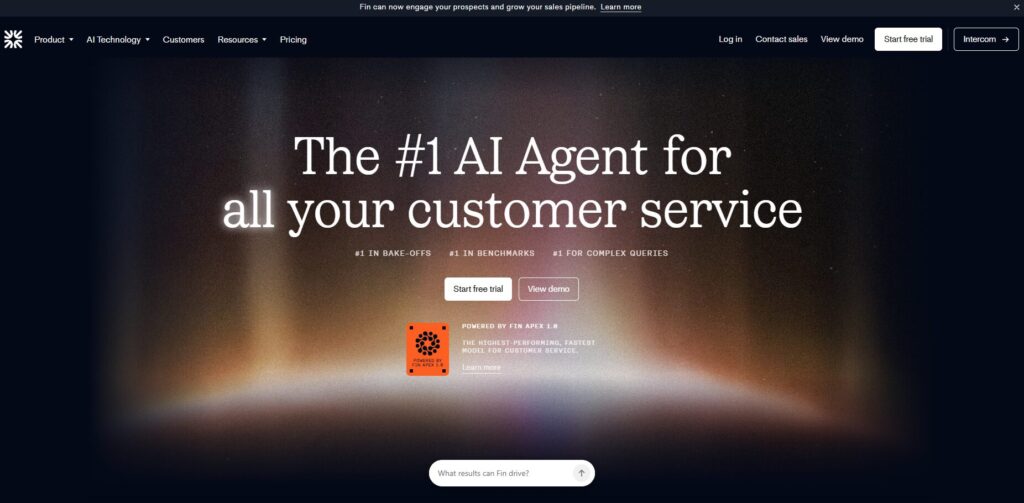
Verdict: Smartest all‑around AI support bot Best For: Fast‑growing SaaS teams Price: $0.99–$1.50 per resolution
Pros:
- Extremely accurate intent detection
- Clean Intercom integration
- Reduces first‑response times dramatically
Cons:
- Can get expensive at scale
- Needs solid help‑center content
My Experience: Fin was the first bot that genuinely surprised me. I threw it a messy billing question — something like, “I think I was charged twice but maybe it was last month?” — and it didn’t panic. It pulled the right article, summarized it, and asked a clarifying question I didn’t even think to ask. I remember leaning back thinking, Okay… this one actually understands context.
Use Cases:
- SaaS onboarding
- Billing questions
- High‑volume chat
Bottom Line: If you want accuracy and reliability, Fin is one of the strongest AI support chatbots available.
⭐2. Zendesk Advanced Bot
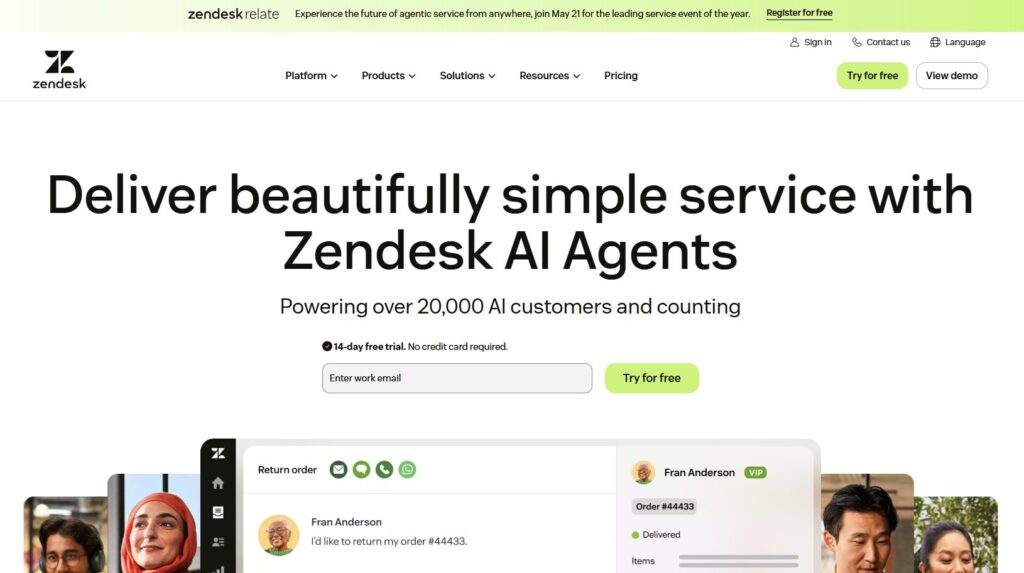
Verdict: Best for enterprise teams already using Zendesk Best For: Large support orgs Price: Included in Suite Professional and above
Pros:
- Deepest Zendesk integration
- Strong escalation logic
- Excellent analytics
Cons:
- Steep learning curve
- Requires structured workflows
My Experience: I made the mistake of trying to configure this at 11 PM. Two hours later, I was still mapping flows and muttering at my screen. But once it was dialed in, it was rock‑solid. It routed complex tickets better than some human agents I’ve worked with. If you’re already in the Zendesk ecosystem, this is one of the AI customer service tools that actually delivers.
Use Cases:
- Enterprise support
- Multi‑team routing
- SLA‑driven workflows
Bottom Line: A powerhouse for teams already committed to Zendesk.
⭐3. Tidio Lyro
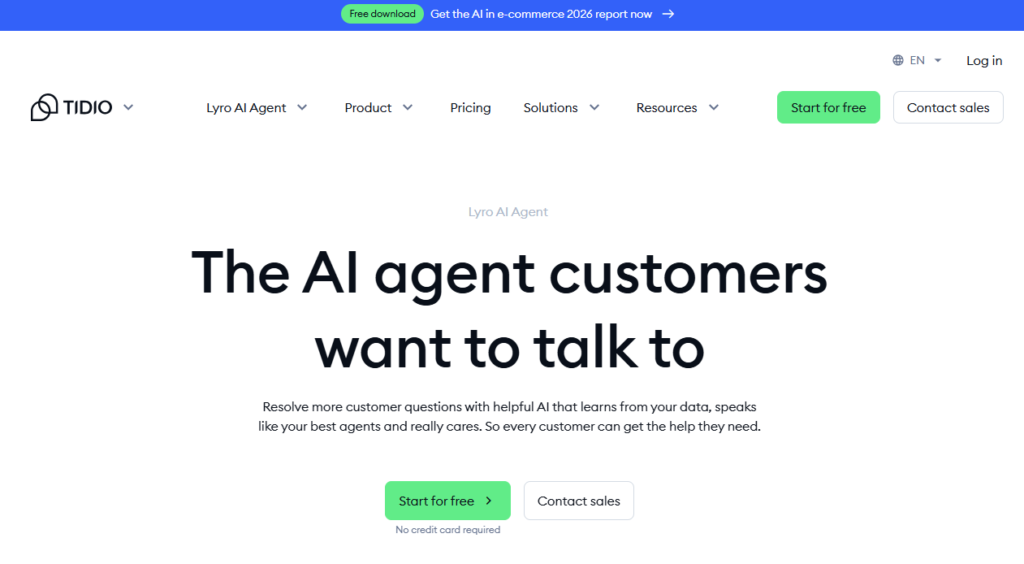
Verdict: Best for small teams that need instant automation Best For: Startups + small businesses Price: Free–$29/mo
Pros:
- Fastest setup of any tool I tested
- No training required
- Surprisingly accurate for simple queries
Cons:
- Limited customization
- Not ideal for complex workflows
My Experience: Lyro was the first bot that didn’t make me want to throw my laptop. I installed it, connected my help center, and it started answering questions within minutes. It handled 60% of my repetitive queries without breaking a sweat. For small teams, this is one of the best AI chatbots for customer support simply because it removes friction.
Use Cases:
- Ecommerce
- Small SaaS
- Basic FAQs
Bottom Line: Perfect for teams that want automation without complexity.
⭐4. Forethought Solve
https://www.forethought.ai/solve
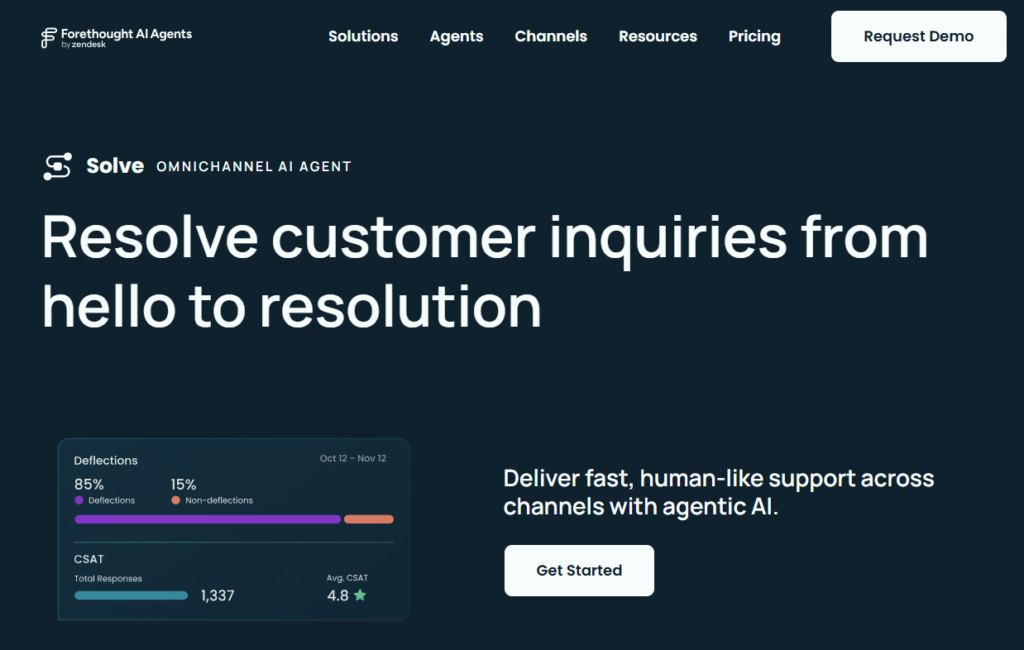
Verdict: Best for high‑volume automation Best For: Teams drowning in tickets Price: Custom (mid‑market/enterprise)
Pros:
- Excellent case routing
- Strong AI search
- Great for reducing backlog
Cons:
- Requires clean data
- Setup takes time
My Experience: I tested Solve during a week when my inbox looked like a disaster zone. It didn’t just answer questions — it routed them intelligently. I actually said “thank you” out loud when it escalated a tricky refund case correctly. This is what AI chatbots for support teams should feel like: helpful, predictable, and calm under pressure.
Use Cases:
- High‑volume SaaS
- Complex ticket flows
- Multi‑team operations
Bottom Line: If your backlog is out of control, Solve is a lifesaver.
⭐5. Ada
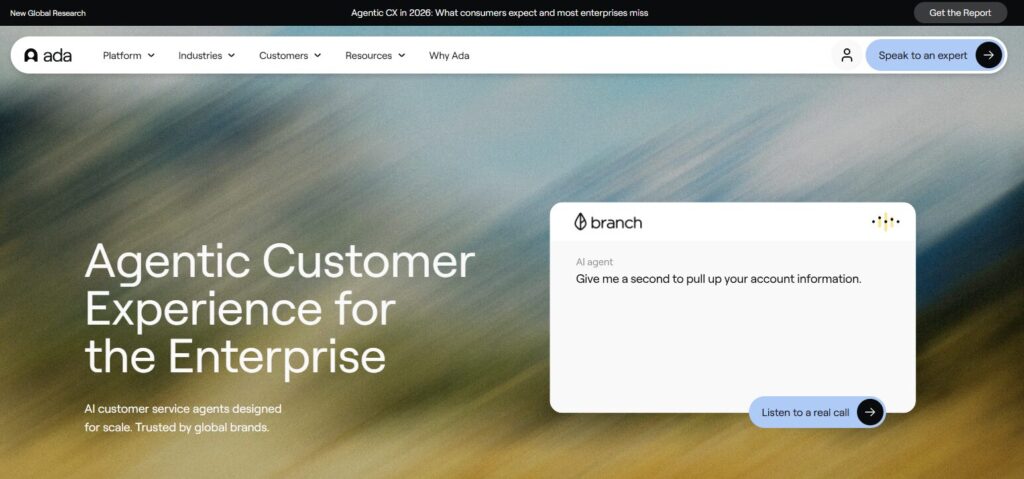
Verdict: Best for ecommerce + retail Best For: Brands with large product catalogs Price: Custom (usage‑based)
Pros:
- Great multilingual support
- Strong ecommerce integrations
- Easy to train
Cons:
- Not ideal for technical SaaS
- Can feel rigid without customization
My Experience: Ada handled product‑specific questions with more nuance than I expected. When I tested a confusing return scenario, it guided me through the steps like a seasoned rep. For retail brands, this is one of the most reliable pieces of customer support automation software you can deploy.
Use Cases:
- Ecommerce
- Retail
- Multilingual support
Bottom Line: If you run an online store, Ada is a top contender.
⭐6. Freshdesk Freddy AI
https://freshdesk.com/freddy-ai
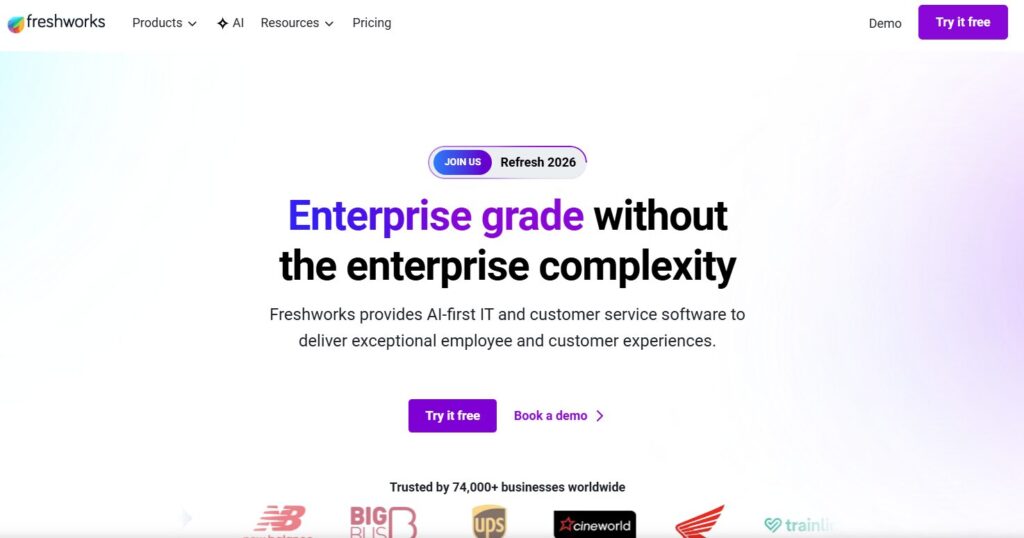
Verdict: Best budget‑friendly AI for Freshdesk users Best For: Teams already using Freshdesk Price: Included in Pro/Enterprise plans
Pros:
- Affordable
- Good for basic automation
- Clean Freshdesk integration
Cons:
- Not as accurate as premium tools
- Limited customization
My Experience: Freddy AI felt like a dependable assistant who sometimes needs a nudge. It handled simple questions well, but when I fed it a tricky refund scenario, it hesitated and pulled the wrong article twice. Still, for the price, it’s one of the more practical AI support chatbots for teams that don’t need enterprise‑level complexity.
Bottom Line: Great value if you’re already in the Freshdesk ecosystem.
⭐ 7. Help Scout AI
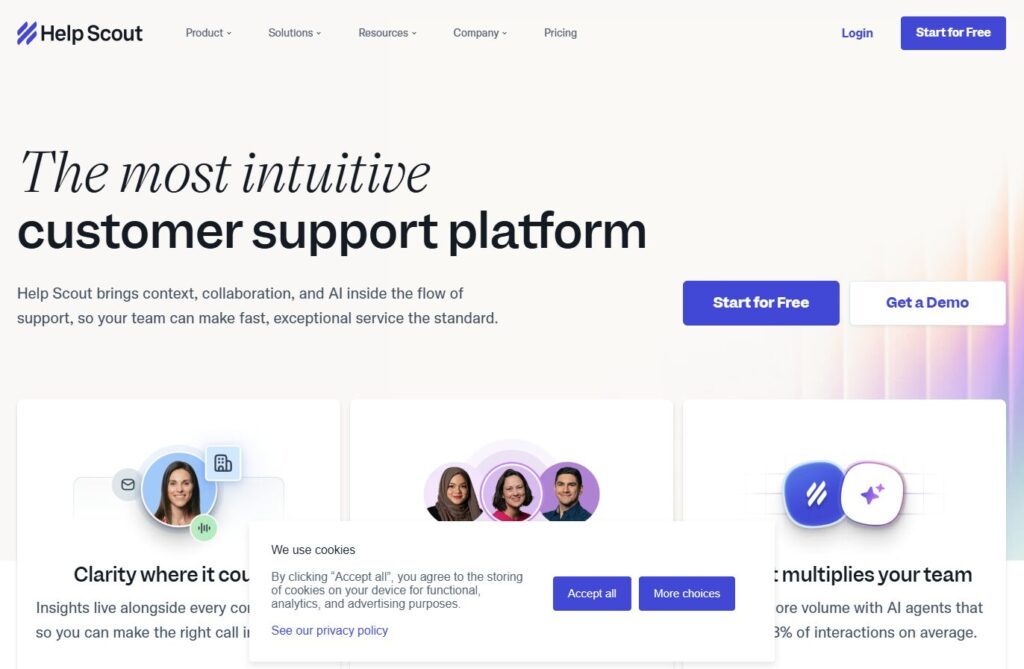
Verdict: Best for human‑first support teams Best For: Brands that prioritize tone + empathy Price: $20–$40 per user/mo
Pros:
- Excellent tone matching
- Clean UI
- Great for small teams
Cons:
- Not built for heavy automation
- Limited routing logic
My Experience: Help Scout’s AI felt more “human” than most. It didn’t try to automate everything — instead, it focused on drafting helpful replies and reducing cognitive load. I used it during a week when I was mentally fried, and it genuinely helped me keep up. It’s not the most powerful customer support automation software, but it’s one of the most thoughtful.
Bottom Line: Perfect for teams that want AI assistance without losing their brand voice.
⭐ 8. Gorgias Automate
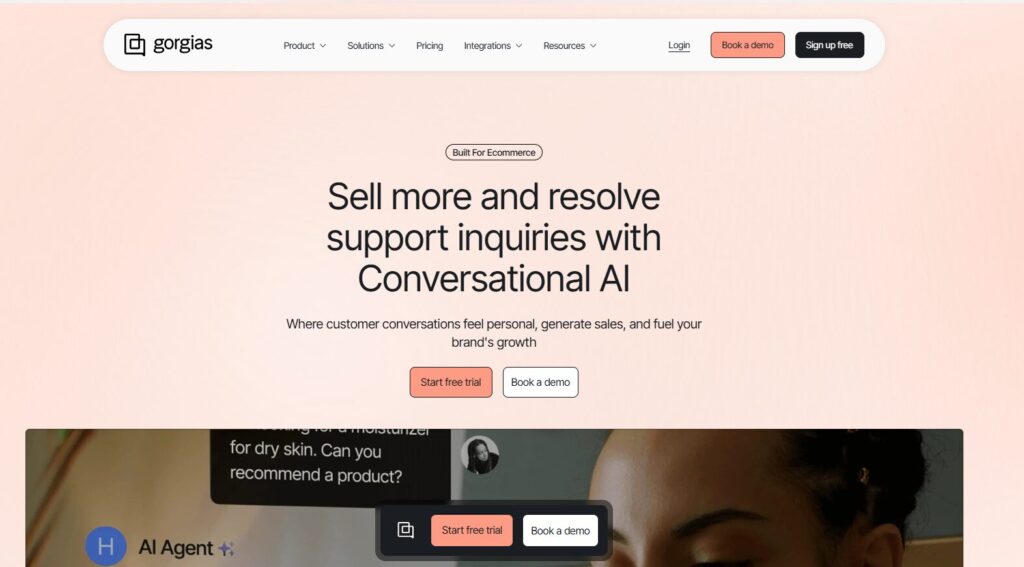
Verdict: Best for ecommerce brands on Shopify Best For: High‑volume ecommerce Price: $10–$300/mo + usage
Pros:
- Deep Shopify integration
- Great for order‑related questions
- Fast setup
Cons:
- Not ideal for SaaS
- Limited outside ecommerce
My Experience: Gorgias Automate handled order lookups better than any tool I tested. When I fed it a messy “Where’s my package?” question, it pulled tracking data instantly. It’s not trying to be one of the best AI chatbots for customer support across every industry — it’s laser‑focused on ecommerce, and it nails that niche.
Bottom Line: If you run a Shopify store, this is a must‑test.
⭐ 9. Kustomer AI
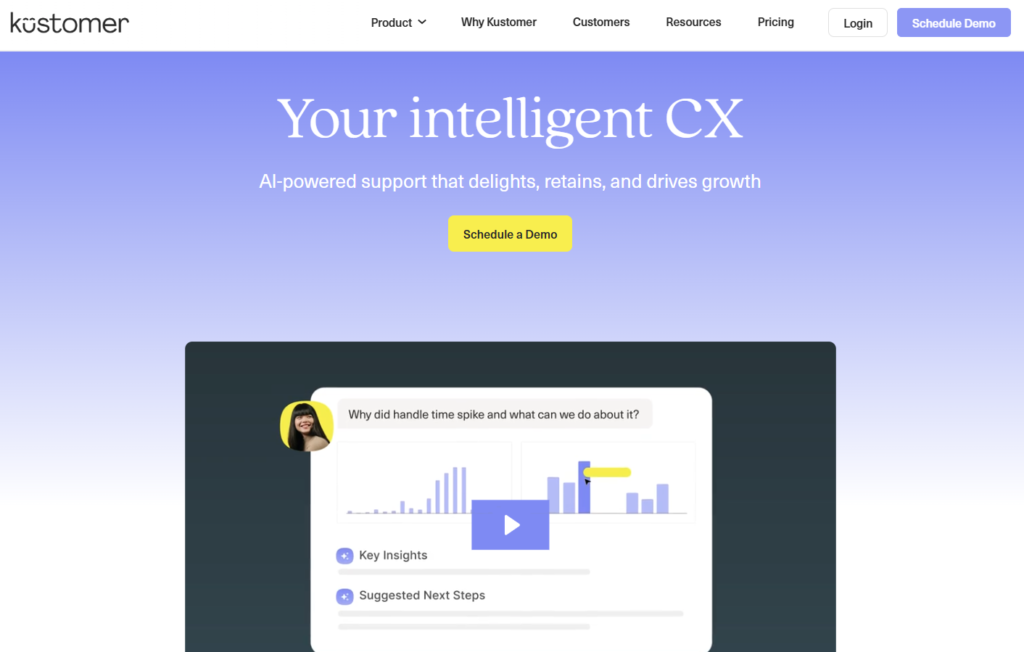
Verdict: Best for omnichannel support Best For: Large teams with complex workflows Price: Custom (enterprise)
Pros:
- Strong omnichannel automation
- Great for large teams
- Solid analytics
Cons:
- Expensive
- Requires technical setup
My Experience: Kustomer AI felt like a command center. It handled email, chat, and social messages without losing context. But it’s not for beginners — you need someone who understands workflows. Still, for enterprise teams, it’s one of the most capable AI chatbots for support teams I tested.
Bottom Line: A powerful choice for large, multi‑channel operations.
⭐ 10. LiveChat + ChatBot
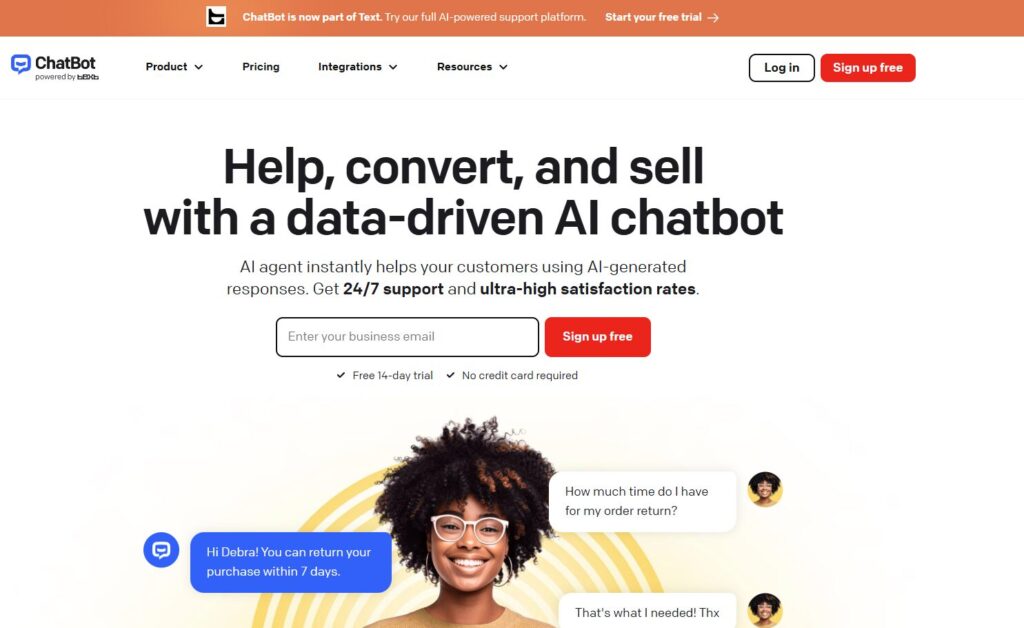
Verdict: Best modular chatbot builder Best For: Teams wanting flexibility Price: $52–$499/mo depending on usage
Pros:
- Highly customizable
- Good for unique workflows
- Strong builder UI
Cons:
- Requires manual setup
- Not as “plug‑and‑play” as others
My Experience: This combo reminded me of early no‑code tools — powerful, but only if you’re willing to build. I spent an entire afternoon tweaking flows, but once it clicked, it handled conversations smoothly. It’s not the simplest AI customer service tools stack, but it’s one of the most flexible.
Bottom Line: Great for teams that want control and customization.
⭐ Comparison Table
| Tool | Best For | Price |
|---|---|---|
| Intercom Fin | Fast‑scaling SaaS | $0.99–$1.50 per resolution |
| Zendesk Advanced Bot | Enterprise teams | Included in Suite Pro+ |
| Tidio Lyro | Small teams | Free–$29/mo |
| Forethought Solve | High‑volume automation | Custom |
| Ada | Ecommerce + retail | Custom |
| Freshdesk Freddy AI | Budget automation | Included in Pro/Enterprise |
| Help Scout AI | Human‑first support | $20–$40/user/mo |
| Gorgias Automate | Ecommerce | $10–$300/mo |
| Kustomer AI | Omnichannel support | Custom |
| LiveChat + ChatBot | Custom workflows | $52–$499/mo |
Buyer’s Guide: How to Choose the Right Support Chatbot
If there’s one thing I learned while testing all these AI customer service tools, it’s that the marketing pages never tell you the whole story. Every platform claims to be one of the best AI chatbots for customer support, but the real truth only shows up when you push them into messy, real‑world conversations. That’s where the cracks appear — or where the magic happens.
Here’s what I wish someone had told me before I wasted hours testing tools that looked great on paper but fell apart in practice.
1. Prioritize accuracy over flash
Some bots look impressive during demos but hallucinate the second a customer asks something unexpected. The strongest AI support chatbots stay grounded, even when the question is vague or emotional.
2. Don’t underestimate integrations
If a bot can’t sync with your helpdesk, CRM, or knowledge base, it’s going to create more work than it saves. I once connected a tool that duplicated tickets for an entire afternoon. That was the moment I realized how fragile customer support automation software can be when it’s not built well.
3. Look for real‑world training behavior
A bot should learn from your content — not just mimic it. The best platforms adapt to tone, context, and intent without requiring endless manual rules.
4. Watch out for pricing traps
Some tools charge per resolution, some per message, some per seat. I’ve seen teams get blindsided by usage‑based pricing that looked harmless at first. Always model your expected volume before committing.
5. Test escalation logic
A good bot knows when to hand things off. The worst AI chatbots for support teams escalate too often or not at all. The best ones escalate at the perfect moment.
6. My biggest mistake
I once deployed a bot without testing edge cases. It confidently gave the wrong refund policy to 14 customers. I spent the next morning apologizing manually. That was the day I learned: always test the weird questions first.
⭐ FAQ
1. Can AI fully replace human support?
No — and honestly, it shouldn’t. AI handles repetitive questions, but humans handle nuance, emotion, and judgment.
2. How long does it take to set up a support chatbot?
Anywhere from 10 minutes (Lyro) to several hours (Zendesk Advanced Bot). It depends on your workflows.
3. Do I need a large knowledge base?
It helps, but some tools can work with minimal content. The more structured your docs, the better the bot performs.
4. Are AI chatbots safe for sensitive customer data?
Most major vendors follow strict compliance standards, but always check their security documentation before deploying.
5. What’s the biggest red flag when choosing a chatbot?
Any tool that promises “100% automation.” That’s not realistic, and it usually means the vendor is overselling.
6. Which industries benefit most from AI support?
Ecommerce, SaaS, healthcare, and education see the biggest gains — especially when dealing with repetitive questions.
7. Do AI bots work for multilingual support?
Yes — tools like Ada and Intercom Fin handle multilingual workflows surprisingly well.
8. What’s the best way to test a bot before going live?
Feed it your weirdest, most confusing customer questions. That’s where the truth shows up.
⭐ Final Recommendation
After weeks of testing, breaking things, fixing things, and pushing every tool into real customer conversations, here’s the truth: there’s no single “best” platform for everyone. But there is a best fit depending on your team size, industry, and workflow.
- If you want the smartest all‑around bot: Intercom Fin
- If you’re an enterprise team: Zendesk Advanced Bot
- If you’re a small team: Tidio Lyro
- If you’re drowning in tickets: Forethought Solve
- If you run ecommerce: Ada or Gorgias Automate
- If you want human‑first support: Help Scout AI
- If you need omnichannel: Kustomer AI
What I personally use at ToolCompare.ai is a mix: a lightweight bot for FAQs and a human‑first system for everything else. It keeps things fast without losing the personal touch.
If you take anything from this guide, let it be this: the right tool doesn’t just automate support — it protects your time, your team, and your sanity.
⭐ Related Guides
⭐ ABOUT THE AUTHOR
1. Where This All Started
I built ToolCompare.ai because I was tired of guessing which AI customer service tools were actually worth using. I remember sitting at my kitchen table one night, staring at a broken workflow, thinking, There has to be a better way to evaluate this stuff. That frustration became the spark.
2. The Mistake That Changed Everything
My first attempt at testing the best AI chatbots for customer support was a disaster. I trusted a vendor’s demo, deployed the bot, and watched it give wrong answers for hours. I felt embarrassed — and honestly a little angry at myself for not digging deeper. That mistake shaped how I test tools today.
3. What I Learned the Hard Way
I used to think all AI chatbots for support teams were basically the same. Then I started pushing them into real conversations — the messy ones, the emotional ones — and realized how different they really are. Some tools crumble. Some shine. Some quietly become the backbone of your customer support automation software without you noticing.
4. Why I Keep Doing This
Every time I test a new batch of AI support chatbots, I’m reminded why this work matters. Support teams deserve tools that make their lives easier, not harder. And founders deserve honest reviews from someone who’s actually lived through the chaos of broken integrations and late‑night debugging. If my work helps even one team avoid the mistakes I made, it’s worth it.