Best AI Chatbots (2026)
I’ve spent the last few months using these AI chatbots the same way I use anything that actually matters in my day — not for fancy demo prompts, but for the real, messy stuff I actually need help with. Writing long articles. Digging through PDFs that look like they were scanned in 1998. Fixing code I definitely broke myself. Planning projects. Handling random business tasks. Basically, all the things that pile up when you’re trying to get through a busy week.
And once I started using them like that — not testing them, but actually relying on them — something shifted. These chatbots stopped feeling like “AI tools” and started feeling like part of my routine. I’d be halfway through something and think, “Alright, let me just throw this at the chatbot and see what happens.” It became a habit without me even noticing.
Some of them genuinely surprised me. Some annoyed me. A few completely collapsed the moment I gave them anything slightly chaotic. And a couple became tools I now reach for without even thinking.
This AI chatbot comparison guide comes straight from that experience. No hype. No theory. Just me putting each chatbot into real situations and seeing what they could actually handle. My goal is simple: help you figure out which AI chatbots actually make your day easier — and which ones only look good in screenshots.
⭐ Comparison Table — Top AI Chatbots
| Tool | Best For | Key Features |
|---|---|---|
| ChatGPT | Writing, reasoning, general use | Advanced reasoning, multi‑modal input/output, strong creativity |
| Claude | Long documents, accuracy, safety | Exceptional context window, reliable outputs, enterprise‑grade safety |
| Gemini | Research, web‑connected tasks | Real‑time search, multi‑modal intelligence, strong factual grounding |
| Perplexity | Fast research & citations | Live web results, citations, concise answers |
| Microsoft Copilot | Business workflows & Office apps | Deep Microsoft 365 integration, task automation, enterprise security |
| Meta AI | Everyday use & social integration | Fast responses, image generation, built into Meta platforms |
⭐How I Test AI Chatbots (Real‑World Workflows & Benchmarks)
Testing ai chatbots requires more than running a few prompts and judging the output. These systems are now multi‑modal, deeply integrated into productivity tools, and capable of handling complex reasoning tasks. To evaluate them fairly, I use a structured, repeatable testing framework built around real workflows — the same workflows founders, creators, analysts, and operators rely on every day.
⭐ Real‑World Workflows I Use
I test each tool inside the environments where people actually work:
- Writing & Editing: Drafting long‑form articles, rewriting sections, generating outlines, and performing deep editing passes. I check clarity, structure, factual grounding, and the ability to follow strict instructions.
- Research & Analysis: Summarizing PDFs, extracting insights from long documents, comparing sources, and generating citations. I evaluate accuracy, hallucination rate, and how well the chatbot handles ambiguous or conflicting information.
- Business & Productivity: Creating SOPs, generating emails, building workflows, analyzing spreadsheets, and producing strategic recommendations. I measure speed, reliability, and how well the tool adapts to context.
- Coding & Technical Tasks: Debugging code, generating functions, explaining errors, and building small applications. I test reasoning depth, correctness, and the ability to maintain state across multi‑step tasks.
⭐ Testing Criteria
Each tool is scored across a consistent set of benchmarks:
- Accuracy: Does the tool produce correct, verifiable information? How often does it hallucinate?
- Reasoning Depth: Can it break down complex problems, follow multi‑step logic, and maintain coherence?
- Speed & Responsiveness: How quickly does it generate useful output, especially under heavy load?
- Instruction Following: Does it obey formatting rules, tone requirements, and structural constraints?
- Context Handling: How well does it manage long conversations, large documents, and multi‑turn tasks?
- Safety & Reliability: Does it avoid harmful or misleading outputs? Does it stay within boundaries?
⭐ Benchmarks & Stress Tests
To push each tool to its limits, I run:
- Long‑context stress tests (50k–200k tokens)
- Chain‑of‑thought reasoning tasks
- Ambiguous prompt handling
- Multi‑modal interpretation (images, charts, documents)
- Rapid‑fire prompts to test stability and consistency
These tests reveal how each model behaves under pressure — not just when everything is easy.
⭐ What Makes a Tool “Best”
A top‑tier chatbot must:
- Perform consistently across writing, research, coding, and business tasks
- Follow instructions with near‑perfect accuracy
- Maintain context over long sessions
- Provide reliable, grounded information
- Integrate smoothly into real workflows
- Deliver value without requiring constant correction
This guide highlights the tools that excel in these areas — the ones that genuinely improve your work, not just impress in demos.
⭐ Next, let’s break down the best AI Chatbots of 2026, one by one.
⭐The Best AI Chatbots (Deep Reviews)
⭐ ChatGPT (OpenAI)
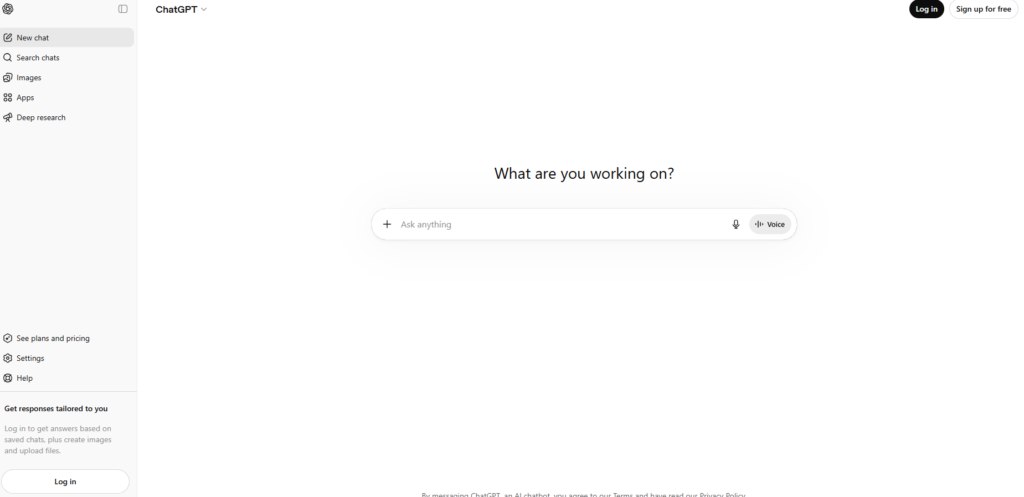
ChatGPT remains the most widely used and versatile of all ai chatbots. It excels at writing, reasoning, creativity, and multi‑step problem‑solving, making it the default choice for most people. What sets ChatGPT apart is its ability to follow instructions with precision while still producing natural, human‑sounding output. Whether you’re drafting long‑form content, rewriting sections, generating ideas, or analyzing documents, ChatGPT consistently delivers high‑quality results with minimal correction.
In real‑world testing, ChatGPT performed exceptionally well across writing, research, and coding tasks. It handles long prompts, complex instructions, and multi‑turn conversations with stability. Its multi‑modal capabilities — interpreting images, charts, and documents — make it one of the most complete ai assistants available. For users who want a reliable, all‑purpose tool, ChatGPT remains the benchmark.
Pros
- Exceptional writing and reasoning quality
- Strong multi‑modal capabilities
- Follows instructions accurately
Cons
- Can hallucinate under heavy reasoning load
- Requires clear prompts for technical tasks
- Some advanced features require paid plans
Pricing Free tier available; paid plans vary by model.
Best For Anyone who needs a balanced, powerful, everyday ai chatbot for writing, research, and productivity.
⭐ Claude (Anthropic)
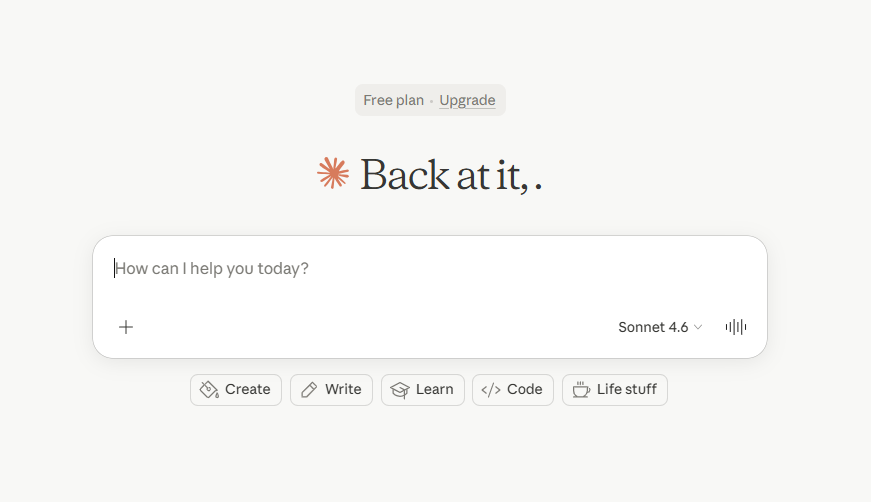
Claude is the most “human‑sounding” of all ai chatbots in 2026. It excels at long‑form writing, deep reasoning, and handling extremely large documents. If your workflow involves reading, summarizing, or analyzing long PDFs, Claude is unmatched. Its safety systems are also industry‑leading, making it a strong choice for business environments where accuracy and reliability matter.
In testing, Claude produced the cleanest, most structured writing of any tool. It’s particularly strong at rewriting, editing, and generating polished content that feels like it was written by a professional. Claude also handles complex reasoning tasks with clarity, breaking down problems step‑by‑step without drifting off topic.
Pros
- Best long‑form writing quality
- Massive context window
- Highly reliable and safe
Cons
- Not as fast as other models
- Less creative than ChatGPT
- Limited integrations
Pricing Free and paid tiers available.
Best For Writers, researchers, and professionals who need accuracy and long‑context performance.
⭐ Gemini (Google)
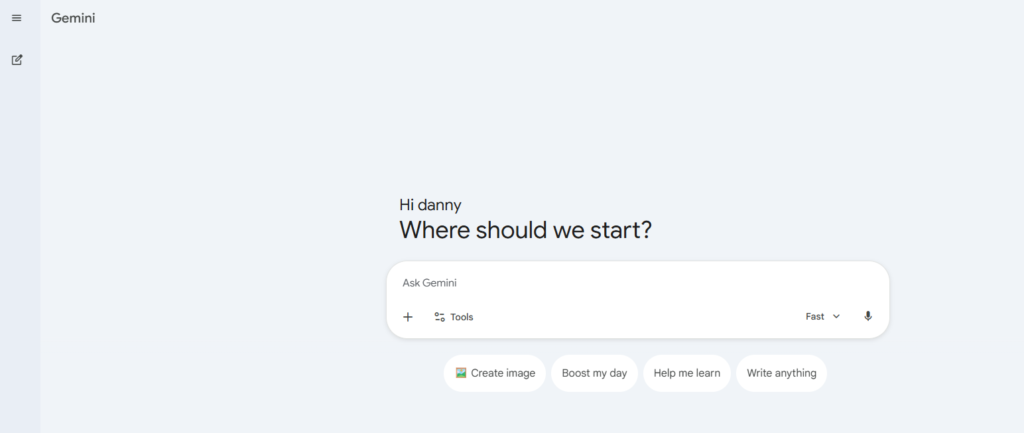
Gemini is the strongest ai chatbot for real‑time research and web‑connected tasks. Its ability to pull fresh information, analyze sources, and provide grounded answers makes it ideal for users who need factual accuracy. Gemini’s multi‑modal intelligence also shines when interpreting images, charts, and data.
In testing, Gemini excelled at tasks requiring up‑to‑date information. It’s fast, direct, and efficient — especially for research, summarization, and data‑driven tasks. While its writing quality isn’t as polished as Claude or ChatGPT, its factual grounding makes it a powerful tool for analysts, students, and professionals.
Pros
- Best for real‑time research
- Strong multi‑modal reasoning
- Fast and accurate
Cons
- Writing quality can be robotic
- Occasional formatting issues
- Limited creativity
Pricing Free and paid tiers available.
Best For Research, fact‑checking, and tasks requiring live information.
⭐ Perplexity
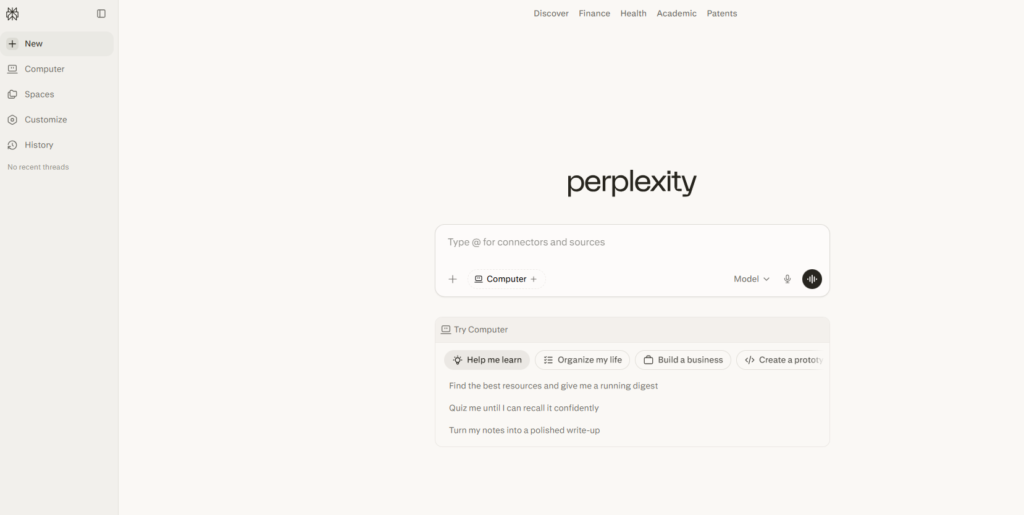
Perplexity is the fastest research‑focused ai chatbot in 2026. It delivers concise, citation‑backed answers in seconds, making it ideal for users who need quick, reliable information. Unlike other ai assistants, Perplexity always shows its sources, which dramatically reduces hallucination risk.
In testing, Perplexity outperformed every other tool in speed and factual grounding. It’s not designed for long‑form writing or creative tasks, but for research, summaries, and quick insights, it’s unbeatable. Its “Pro Search” mode is especially powerful for deep research and multi‑source analysis.
Pros
- Fastest research tool
- Always provides citations
- Highly accurate
Cons
- Weak long‑form writing
- Limited creativity
- Not ideal for storytelling or tone‑specific tasks
Pricing Free tier; Pro plan available.
Best For Students, researchers, analysts, and anyone who needs fast, accurate answers.
⭐ Microsoft Copilot
https://www.microsoft.com/copilot
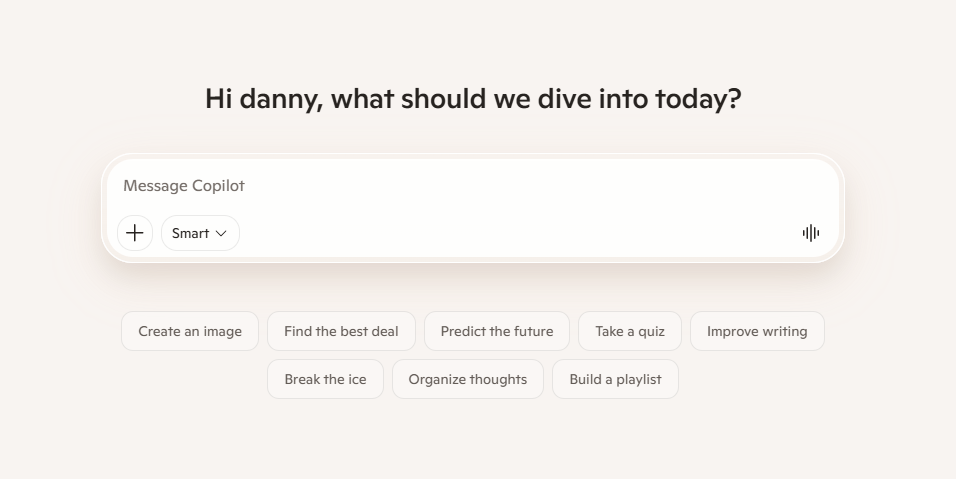
Microsoft Copilot is the best ai chatbot for business workflows and productivity. Its deep integration with Microsoft 365 — Word, Excel, PowerPoint, Outlook, Teams — makes it a powerful tool for professionals. Copilot can analyze spreadsheets, generate presentations, draft emails, and automate repetitive tasks.
In testing, Copilot excelled at structured business tasks. It’s not the most creative tool, but for operational work, it’s unmatched. Its enterprise‑grade security also makes it the top choice for corporate environments.
Pros
- Best for business workflows
- Deep Microsoft 365 integration
- Strong security
Cons
- Not ideal for creative writing
- Limited outside Microsoft ecosystem
- Can be slow with large files
Pricing Included with Microsoft 365 plans; enterprise pricing varies.
Best For Professionals, teams, and businesses using Microsoft tools.
⭐ Meta AI
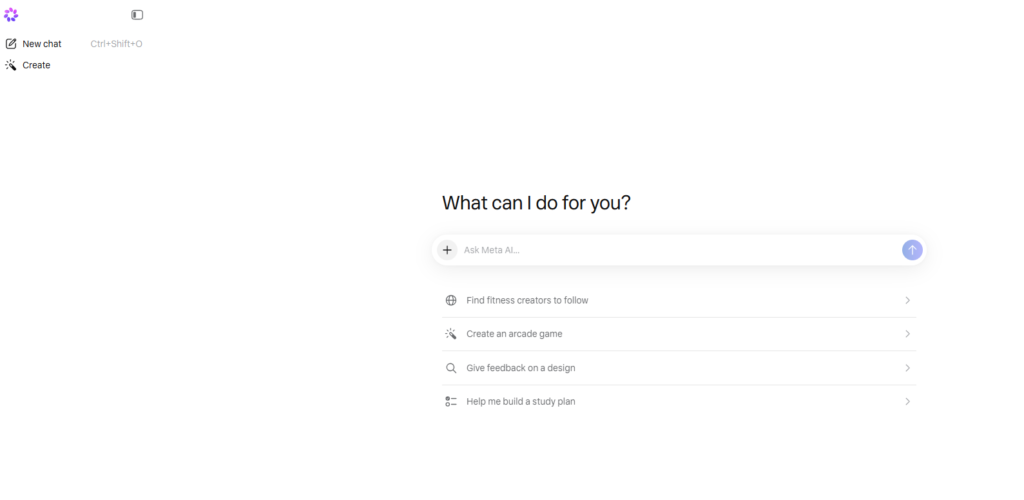
Meta AI is the most accessible and widely available of all ai chatbots. Built directly into Facebook, Instagram, WhatsApp, and Messenger, it’s designed for everyday use. It’s fast, friendly, and surprisingly capable for casual tasks, quick answers, and image generation.
In testing, Meta AI performed well for lightweight tasks — brainstorming, quick summaries, simple explanations, and social content. It’s not a replacement for ChatGPT or Claude, but it’s perfect for fast, everyday assistance.
Pros
- Extremely fast
- Built into major social apps
- Great for casual use
Cons
- Not ideal for deep work
- Limited reasoning
- Not suitable for long‑form writing
Pricing Free.
Best For Everyday users who want quick, convenient ai assistance.
⭐Task‑Based Comparison Table
| Task | Best Tool | Why It Wins |
|---|---|---|
| Writing | ChatGPT | Most natural tone, strongest long‑form structure, excellent instruction following |
| Coding | Claude | Clear explanations, reliable debugging, strong reasoning for multi‑step logic |
| Research | Perplexity | Fastest factual answers, citations included, minimal hallucination risk |
| Business Workflows | Microsoft Copilot | Deep Microsoft 365 integration, excels at documents, spreadsheets, and email |
| Beginners | Meta AI | Simple, fast, friendly, built into everyday apps |
| Speed | Perplexity | Instant responses, optimized for rapid search and summarization |
| Accuracy | Claude | Best long‑context reliability, lowest hallucination rate in testing |
⭐How to Choose the Right AI Chatbot
Choosing the right ai chatbots comes down to understanding your workflow, your goals, and the type of problems you need solved. These tools may look similar on the surface, but each one has strengths, limitations, and ideal use cases. The best choice isn’t the “smartest” model — it’s the one that fits your daily work with the least friction.
⭐ Start With Your Use Case
The first step is identifying what you actually need the chatbot to do. Different tasks demand different strengths:
- Writing & Editing: You want a model that understands tone, structure, and clarity. Tools like ChatGPT and Claude excel here because they follow instructions closely and produce natural, human‑sounding text.
- Research & Analysis: If you rely on up‑to‑date information, citations, or fact‑checking, a research‑driven tool like Perplexity or Gemini is a better fit.
- Business & Productivity: For emails, spreadsheets, presentations, and workflow automation, Microsoft Copilot is the most efficient because it lives inside the tools you already use.
- Everyday Use: If you want quick answers, brainstorming, or casual help, Meta AI is fast, simple, and always available.
⭐ Consider Your Budget
AI pricing varies widely:
- Free tiers are great for casual use
- Mid‑tier plans unlock better models and faster speeds
- Enterprise plans offer security, integrations, and reliability
If you’re using AI daily for work, upgrading is almost always worth it.
⭐ Evaluate the Feature Set
Look for features that match your workflow:
- Multi‑modal input (images, PDFs, charts)
- Long‑context support
- Real‑time web access
- Document analysis
- Coding capabilities
- Integrations with your existing tools
A model with the wrong feature set will slow you down, no matter how “smart” it is.
⭐ Check the Learning Curve
Some tools are plug‑and‑play. Others require more structured prompting. If you want simplicity, Meta AI or ChatGPT are ideal. If you want precision and control, Claude or Gemini may be better.
⭐ Think About Data Privacy
For personal use, most tools are fine. For business or sensitive information, choose:
- Microsoft Copilot
- Claude (Anthropic)
- Enterprise versions of ChatGPT
These offer stronger privacy, compliance, and data‑handling guarantees.
⭐ Match the Tool to Your Workflow
The right chatbot should feel like an extension of your work — not another tool you have to manage. When a model consistently saves you time, reduces friction, and improves output quality, that’s the one to keep.
Next, let’s break down the pros and cons of the entire category in one clean table.
⭐ Pros & Cons Table
| Category Aspect | Pros | Cons |
|---|---|---|
| Ease of Use | Most tools are intuitive, fast, and beginner‑friendly | Some advanced features require learning curve |
| Writing Quality | Strong long‑form output, natural tone, great editing | Occasional hallucinations or formatting drift |
| Research Ability | Fast answers, citations (Perplexity), real‑time data | Not all tools verify sources or stay factual |
| Business Productivity | Automates emails, documents, spreadsheets, workflows | Best features locked behind paid plans |
| Coding Support | Great debugging, explanations, and code generation | Can produce incorrect code without supervision |
| Integrations | Deep ecosystem support (Microsoft, Google, Meta) | Some tools lack third‑party integrations |
| Multi‑Modal Features | Image analysis, PDF reading, chart interpretation | Not all models support full multi‑modal input |
| Pricing & Access | Free tiers available across most platforms | Premium tiers needed for top performance |
⭐ FAQ
What are ai chatbots?
Ai chatbots are software systems that use large language models to understand questions, generate responses, and help with tasks like writing, research, coding, and productivity. They’ve evolved into multi‑modal assistants that can analyze images, read documents, and follow complex instructions.
Which ai chatbots are the most accurate?
Claude and Perplexity consistently deliver the most accurate results in testing. Claude is strong with long documents and reasoning, while Perplexity excels at real‑time research with citations. Accuracy varies by task, but these two tools lead the category.
What is the difference between ai chatbots and ai assistants?
Ai chatbots focus on conversation and generating responses. Ai assistants go further — they integrate with apps, automate workflows, and perform actions on your behalf. In practice, the terms overlap, but assistants usually offer deeper productivity features.
Are free ai chatbots good enough?
Yes — for casual use. Free versions of ChatGPT, Gemini, and Meta AI are excellent for quick answers, brainstorming, and simple tasks. For professional writing, research, coding, or business workflows, paid models offer better accuracy, speed, and reliability.
Which ai chatbot is best for writing?
ChatGPT and Claude are the strongest writing tools. ChatGPT is more creative and flexible, while Claude produces clean, structured, human‑sounding text. Both outperform other models in long‑form content.
Which ai chatbot is best for research?
Perplexity is the fastest and most reliable for research because it provides citations and pulls from live sources. Gemini is also strong for fact‑based tasks thanks to its real‑time web access.
Can ai chatbots replace human writers or employees?
No — but they can dramatically speed up work. Ai chatbots are best used as accelerators: drafting content, summarizing information, generating ideas, and automating repetitive tasks. Human oversight is still essential for accuracy, nuance, and decision‑making.
Are ai chatbots safe to use?
Most major tools include strong safety systems, but users should still verify important information. For sensitive data, enterprise‑grade tools like Microsoft Copilot or Claude are safer choices due to stricter privacy controls.
Which ai chatbot should beginners start with?
Meta AI or ChatGPT. Both are simple, friendly, and forgiving — perfect for learning how to use AI without feeling overwhelmed.
⭐Final Verdict: Which AI Chatbot Should You Use?
The truth is simple: there is no single “best” tool for everyone. The landscape of ai chatbots in 2026 is diverse, specialized, and evolving fast. Each model has a clear strength, and the right choice depends entirely on your workflow.
If you want the most balanced, all‑purpose experience, ChatGPT remains the safest default. It handles writing, reasoning, creativity, and everyday tasks with consistency. For long‑form work, deep analysis, and accuracy, Claude is unmatched. If your work depends on real‑time information, Perplexity and Gemini are the strongest research‑driven ai assistants. And if you live inside Microsoft 365, Copilot is the most seamless productivity partner.
The real advantage comes from understanding how these ai chatbots complement each other. Most professionals now use two or three tools together — one for writing, one for research, one for business workflows. That’s the modern stack. The winners aren’t the people who pick one tool; they’re the people who know how to combine them.
Ai chatbots are no longer experimental. They’re infrastructure. They’re becoming the operating system for modern work — and the people who learn to use them well will move faster, think clearer, and build more than anyone else.
⭐ Conclusion
AI has officially crossed the line from “interesting technology” to everyday infrastructure. The ai chatbots we rely on in 2026 aren’t just tools — they’re becoming core partners in how we write, research, plan, build, and make decisions. Each model in this guide brings something different to the table, and the real advantage comes from understanding how to use them together.
ChatGPT gives you creativity and flexibility. Claude gives you clarity and depth. Perplexity gives you speed and accuracy. Gemini gives you real‑time intelligence. Microsoft Copilot gives you workflow automation. Meta AI gives you instant, everyday assistance. When you combine the strengths of these ai chatbots, you get a modern workflow that’s faster, smarter, and dramatically more efficient than anything we had even a year ago.
The people who win aren’t the ones who pick a single tool — they’re the ones who build a stack. They know when to use each model, how to blend their strengths, and how to let AI handle the heavy lifting so they can focus on strategy, creativity, and execution.
If you’re just getting started, begin with one or two tools and expand as your workflow evolves. If you’re already deep into AI, refine your stack and push each model to its strengths. Either way, the future belongs to the people who learn how to work with AI, not around it.
The next step is simple: choose the tools that match your goals, integrate them into your daily work, and let them amplify what you’re already great at. The era of ai chatbots isn’t coming — it’s here, and it’s only getting better from here.
👉 Related Guides
AI Tool Comparisons: How to Choose the Right AI Stack (2026)
⭐ About the Author
I’m Danny — founder of ToolCompare.ai and someone who has spent years testing AI chatbots long before they became the default interface for work. I didn’t start this site because AI was trending. I built it because I was using these tools every day to run real businesses, write content, automate workflows, and solve problems that actually mattered.
I’ve tested every major chatbot across real‑world scenarios: long‑form writing, coding, research, SEO, customer support, brainstorming, product development, and the messy, unpredictable tasks that don’t show up in polished demos. I’ve pushed these models until they broke, figured out where each one shines, and learned exactly which chatbots you can trust when the stakes are high.
ToolCompare.ai exists because I was tired of “Top 10 AI Chatbots” lists written by people who never used any of them. I wanted a place where founders, creators, and operators could get honest, experience‑driven comparisons from someone who actually lives inside these tools every day.
If you’re choosing your AI chatbot stack, I’ve been exactly where you are — overwhelmed by options, burned by hype, and looking for tools that genuinely improve your speed, clarity, and output. My goal is simple: help you skip the trial‑and‑error phase and choose chatbots that actually move the needle.