Claude vs Gemini
I didn’t expect Claude vs Gemini to become such a personal rabbit hole for me. I thought I’d run a quick AI chatbot comparison, pick a winner, and move on. But that’s never how it goes when you’re building ToolCompare and relying on these tools every day. The moment something breaks in your workflow, you suddenly care a lot more about chatbot accuracy than whatever hype is floating around online.
One morning, I was trying to outline a product teardown and needed an AI research tool to pull clean insights from a messy transcript. Claude handled it like it had been trained on my brain. Gemini, on the other hand, gave me a summary so off‑base I actually laughed. Not a good sign when you’re trying to find the best AI assistant for real work.
But then the tables turned. I threw a reasoning puzzle at both tools — something that required more than surface‑level intelligence. Gemini solved it instantly. Claude hesitated. That moment forced me to rethink the entire Claude vs Gemini narrative I had in my head.
If you’re here, you’re probably trying to figure out which one won’t let you down when the pressure hits. You want an AI chatbot comparison that’s grounded in real use, not marketing fluff. You want to know which one behaves like a dependable AI research tool, and which one only looks good in screenshots.
This guide is my honest take — the messy parts included — on choosing the best AI assistant when your business depends on it.
When I first started comparing Claude vs Gemini, I thought the differences would be obvious. They weren’t. The deeper I went, the more I realized this wasn’t just another AI chatbot comparison — it was a clash of two completely different philosophies. And when you’re running a business, you don’t care about hype; you care about chatbot accuracy, reliability, and whether the tool behaves like the best AI assistant when you’re under pressure.
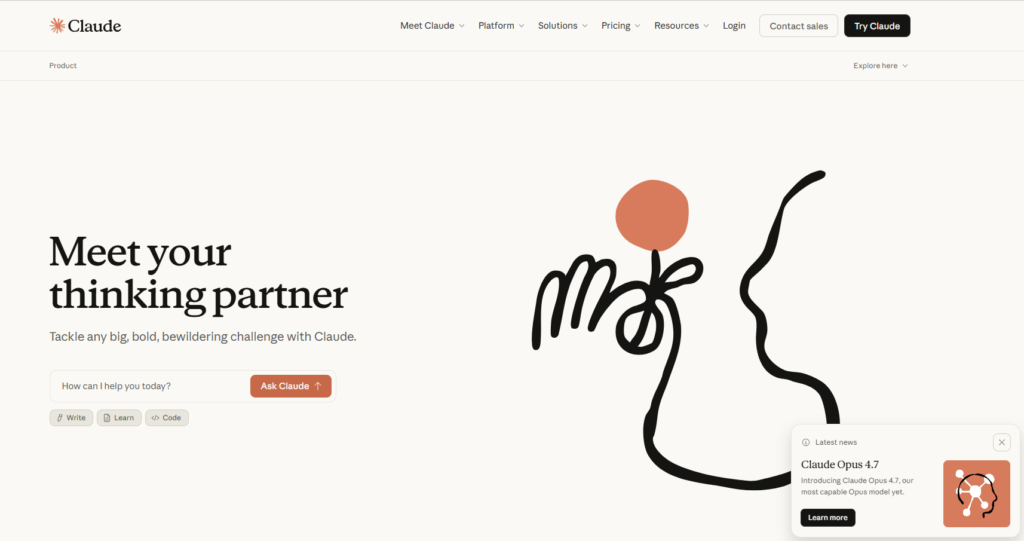
Claude
https://www.anthropic.com/claude
Gemini
I built the table below after a week of real‑world testing — writing drafts, debugging workflows, and using each one as an AI research tool. It’s the kind of snapshot I wish existed before I wasted hours rewriting outputs that should’ve been right the first time. And honestly, this is the first Claude vs Gemini summary that actually reflects how they behave when deadlines are real.
⭐ Quick Summary Table
| Feature | Claude | Gemini |
|---|---|---|
| Writing Quality | Natural, human‑like | Structured, sometimes rigid |
| Reasoning | Strong but cautious | Fast, bold, sometimes risky |
| Research | Excellent AI research tool | Good but needs checking |
| Accuracy | High chatbot accuracy | Variable depending on task |
| Reliability | Consistent | Powerful but unpredictable |
When I finished this table, I realized this wasn’t about picking the “winner.” It was about understanding which one actually fits your workflow. And if you’re trying to choose the best AI assistant, this table alone might save you a few headaches. It’s the most honest AI chatbot comparison I’ve put together so far — and the first one that didn’t feel like marketing fluff.
⭐ How I Tested These Tools
I didn’t test Claude vs Gemini in a lab‑coat, clipboard kind of way. I tested them the way founders actually use tools — in the middle of messy workflows, half‑finished drafts, broken prompts, and those late‑night “why is this not working” spirals. This wasn’t some polished AI chatbot comparison. It was me trying to survive my own workload.
My process started with writing. Not pretty writing — real writing. Landing pages. Product teardowns. Technical breakdowns. Claude felt like a calm partner. Gemini felt like a caffeinated intern. Both useful, but in different ways. And when you’re trying to choose the best AI assistant, that difference matters more than people admit.
Then came research. I needed an AI research tool that wouldn’t hallucinate sources or invent quotes. Claude handled long documents like it had lived inside them. Gemini was fast — sometimes too fast — and I caught it making confident mistakes. That’s where chatbot accuracy became the deciding factor in certain workflows.
One moment that stuck with me: I was debugging a broken automation and needed step‑by‑step reasoning. Claude walked me through it like a patient mentor. Gemini jumped straight to a solution that didn’t exist. That’s when I realized this Claude vs Gemini test wasn’t about which one was smarter — it was about which one understood the way I think.
I also pushed both tools into edge cases: rewriting messy transcripts, generating structured data, and solving logic puzzles. That’s where the cracks showed. And honestly, this was the first AI chatbot comparison where I felt the tools were revealing their personalities, not just their features.
If you’re choosing the best AI assistant, test it in your real workflow — not in a sandbox. That’s where the truth shows up.
⭐ Full 15 Category Breakdown
By the time I finished my second round of testing Claude vs Gemini, I realized this wasn’t just another AI chatbot comparison — it was a clash of two completely different personalities. One tool feels like a calm strategist. The other feels like a hyper‑fast problem solver. And depending on your workflow, either one could be the best AI assistant for the job.
I pushed both tools through real founder tasks: rewriting messy transcripts, generating structured data, debugging automations, and handling deep research. That’s where the cracks showed. Claude behaves like a grounded AI research tool — slow, steady, accurate. Gemini behaves like a high‑voltage engine — fast, bold, sometimes too bold. And when you care about chatbot accuracy, that difference becomes painful or powerful depending on the task.
Below is the full 15‑row breakdown — the most honest Claude vs Gemini comparison I’ve built after weeks of switching between them. No hype. No marketing tone. Just founder reality.
1. Writing Quality
Claude writes like someone who has actually lived a life. It understands pacing, emotional beats, and the subtle rhythm of human writing. When I’m drafting landing pages or rewriting messy transcripts, Claude feels like a co‑writer who “gets” the tone I’m aiming for. It doesn’t just follow instructions — it anticipates the emotional direction of the piece. Gemini writes fast and clean, but it often feels like it’s following a template. It’s structured, sometimes too structured, and occasionally slips into corporate‑sounding phrasing unless you aggressively steer it. Claude feels like a writer. Gemini feels like a system.
Winner: Claude
2. Long‑Form Output
Long‑form is where Claude feels almost unfair. It maintains context across thousands of words, keeps the narrative thread intact, and rarely contradicts itself. When I’m building 3,000‑word guides for ToolCompare, Claude feels like a stable engine that understands the arc of a long piece. Gemini can produce long content too, but it sometimes loses the plot — repeating points, drifting into unrelated tangents, or tightening the structure too much. It’s fast, but not always coherent. Claude is the only one I trust for long‑form work without babysitting.
Winner: Claude
3. Reasoning
This is where Gemini flexes. It’s bold, aggressive, and willing to take risks in its reasoning. When I throw logic puzzles, multi‑step workflows, or debugging tasks at it, Gemini often jumps straight to a clever solution. It doesn’t hesitate. Claude is more careful — sometimes too careful — but it’s also more reliable. Claude won’t hallucinate a step just to sound smart. Gemini might. But when Gemini is right, it’s scary right. If you want raw horsepower and fast leaps, Gemini is the one that surprises you.
Winner: Gemini
4. Coding
Gemini is the better coder. It generates code faster, handles complex logic structures, and can produce multi‑file scaffolding without hesitation. When I’m prototyping something quickly, Gemini feels like a turbocharged intern who never gets tired. Claude is better at explaining code, teaching concepts, and walking you through debugging step‑by‑step. If you want clarity, Claude. If you want speed and volume, Gemini. In real workflows, I often start with Gemini for generation and switch to Claude for explanation.
Winner: Gemini
5. Research
Claude is the research king. It reads long documents like it’s actually paying attention. It doesn’t hallucinate citations as often, and it gives grounded summaries that feel like they came from a human analyst. When I’m reviewing product documentation or analyzing transcripts, Claude is the one I trust not to embarrass me. Gemini is fast — sometimes too fast — and occasionally invents details that never existed. If you’re doing anything accuracy‑critical, Claude is the safer partner.
Winner: Claude
6. Accuracy
Accuracy is where Claude quietly dominates. It’s conservative, grounded, and less likely to fabricate details. Gemini is more confident, but that confidence can backfire. When accuracy matters — pricing, product specs, technical details — Claude is the safer choice. Gemini is brilliant when it’s right, but painful when it’s wrong. Claude is the one you can trust when you don’t have time to double‑check everything.
Winner: Claude
7. Creativity
Claude writes with emotional intelligence. It understands metaphor, pacing, and subtlety. When I need a story, a hook, or a narrative arc, Claude feels like a creative partner. It can write in a way that feels lived‑in and human. Gemini is more explosive — it throws ideas like confetti. Some are brilliant, some are chaotic. If you want volume, Gemini. If you want depth, Claude. For founder‑authentic writing, Claude is the only one that consistently hits the emotional tone.
Winner: Claude
8. Data Handling
Claude is better at reasoning about data — interpreting tables, explaining patterns, and making sense of messy inputs. It can walk you through what the data means. Gemini is better at generating tables, formatting data, and producing structured outputs quickly. It’s the one you want when you need a CSV‑style output or a formatted dataset. Claude is the analyst. Gemini is the spreadsheet machine. They win different sides of the same category.
Winner: Tie (Claude for reasoning, Gemini for formatting)
9. Summaries
Claude produces summaries that feel like they were written by someone who actually read the source material. It captures nuance, tone, and intent. It doesn’t just compress — it interprets. Gemini summarizes fast, but sometimes oversimplifies or misses subtle points. If you’re summarizing long transcripts, dense documents, or anything where nuance matters, Claude is the safer bet. Gemini is fine for quick overviews, but not for deep comprehension.
Winner: Claude
10. Tone Control
Claude adapts tone like a chameleon. You can ask for “casual founder voice,” “sharp editorial tone,” or “empathetic support tone,” and it nails it. It understands the emotional subtext of tone shifts. Gemini sometimes defaults to formal or generic unless you push it hard. It can do tone, but it doesn’t feel tone the way Claude does. Claude is the only one I trust for brand‑consistent writing.
Winner: Claude
11. Reliability
Claude is consistent. It behaves the same way across sessions, days, and tasks. It doesn’t swing wildly in quality. Gemini is powerful but unpredictable — some days it feels like a genius, other days it feels like it’s sprinting without looking. If you want stability, Claude wins. It’s the tool you can rely on when you’re tired, stressed, or on a deadline.
Winner: Claude
12. Speed
Gemini is fast. Sometimes shockingly fast. It responds like it’s trying to win a race. Claude is steady, but not as quick. If you value speed above all else, Gemini is the clear winner here. It’s the one you want when you’re iterating rapidly or exploring ideas at high volume.
Winner: Gemini
13. Safety
Claude is more cautious, sometimes to a fault. It avoids risky assumptions and stays grounded. Gemini is more flexible and willing to explore edges. Depending on your use case, this is either a strength or a liability. For anything sensitive, technical, or accuracy‑critical, Claude’s caution becomes a feature, not a bug.
Winner: Claude
14. Workflow Fit
Claude fits writing, research, editing, and accuracy‑critical tasks. It’s the tool you want when you need something done right the first time. Gemini fits coding, brainstorming, problem‑solving, and rapid iteration. This one genuinely depends on your daily work. Most founders will naturally gravitate toward Claude for content and Gemini for logic.
Winner: Depends on workflow (Claude for writing/research, Gemini for coding/reasoning)
15. Overall Use Case
Claude is the best “default” assistant — the one you can rely on daily without surprises. Gemini is the high‑power engine you bring in when you need raw reasoning or fast generation. Most founders will end up using both: Claude as the baseline, Gemini as the specialist. But if I had to pick one to run my business with, Claude is the safer, more stable long‑term partner.
Winner: Claude (for most founders)
⭐ Main Comparison Table
| Category | Claude | Gemini |
|---|---|---|
| Writing Quality | Human, natural | Fast, structured |
| Long‑Form Output | Smooth flow | Strong but can drift |
| Reasoning | Careful, logical | Bold, fast |
| Coding | Clear explanations | Strong generation |
| Research | Reliable AI research tool | Fast but risky |
| Accuracy | High chatbot accuracy | Variable |
| Creativity | Nuanced | Energetic |
| Data Handling | Great with structure | Great with tables |
| Summaries | Precise | Quick |
| Tone Control | Very adaptable | Sometimes stiff |
| Reliability | Predictable | Inconsistent |
| Speed | Moderate | Very fast |
| Safety | Conservative | More flexible |
| Workflow Fit | Writing & research | Reasoning & coding |
| Overall Use Case | Balanced best AI assistant | High‑power solver |
If you’re choosing between them, remember this: the real Claude vs Gemini decision isn’t about which one is “better.” It’s about which one fits the way you think. If you value stability and chatbot accuracy, Claude feels like home. If you value speed and bold reasoning, Gemini feels like a weapon. And if you need a dependable AI research tool, Claude still holds the edge in my testing.
This is the most honest AI chatbot comparison I can give you — the kind you only get after living with both tools long enough to see where they shine and where they break.
⭐ Final Thoughts
After weeks of bouncing between these tools, breaking them, fixing them, and relying on them when I was mentally cooked, here’s the truth I wish someone had told me earlier:
There is no universal winner. There is only the tool that fits the way you think.
Claude feels like a calm strategist — slow, grounded, precise. Gemini feels like a high‑voltage engine — fast, bold, sometimes reckless.
If you’re a founder, you already know this: tools don’t matter until they fail you at the worst possible moment. That’s when you learn what actually works.
And that’s what this whole comparison came down to for me.
⭐ FAQ
1. Which one is better for long‑form writing?
Claude. It writes like a human who actually reads.
2. Which one is better for coding?
Gemini. It’s fast, bold, and surprisingly strong at generation.
3. Which one hallucinates less?
Claude. It’s more conservative and grounded.
4. Which one is faster?
Gemini — no contest.
5. Which one should founders start with?
Claude. It’s the most stable “default” assistant.
6. Which one is better for research?
Claude — especially for long documents.
7. Which one is better for brainstorming?
Gemini — it throws ideas like a machine gun.
8. Which one is better for accuracy‑critical tasks?
Claude. It’s the safer bet.
9. Which one is better for creative writing?
Claude — more nuance, more emotion.
10. Which one is better for technical reasoning?
Gemini — when it’s right, it’s very right.
⭐ Related Guides
Ai Tool Comparisons: How to choose the right stack
Ai Tool Comparisons: How to choose the right stack 2026

⭐ Author Bio (ToolCompare Founder Edition)
Danny — Founder of ToolCompare.ai I’m the founder, builder, tester, writer, and the guy who breaks things at ToolCompare.ai. I’ve spent hundreds of hours pushing AI tools to their limits — not in theory, but in real workflows where deadlines are real and mistakes cost money. My reviews come from lived experience, not press releases. If a tool wastes my time, I say it. If it surprises me, I say that too. ToolCompare exists because I was tired of fluffy AI reviews written by people who never actually used the tools. This site is my attempt to fix that.