ChatGPT vs Perplexity
I’ve been building ToolCompare.ai long enough to know when a comparison is going to be straightforward and when it’s going to drag me into a rabbit hole I didn’t ask for. ChatGPT vs Perplexity was the second kind. I went into this thinking it would be a simple matchup — two smart tools, two different vibes, a few pros and cons, and done. But the deeper I went, the more I realized this wasn’t just another AI chatbot comparison. It was a clash between two completely different ways of thinking.
The first time I noticed this, I was sitting at my desk at 11:52 PM, staring at a half‑finished article that refused to cooperate. I had ChatGPT open in one tab and Perplexity in another. I needed something that could help me rewrite a messy intro, but I also needed something that could pull real‑time facts without hallucinating. I bounced between them like a lunatic. ChatGPT gave me a beautifully written paragraph that felt alive. Perplexity gave me a list of sources that made me feel like I’d been researching with a blindfold on for years. That was the moment I realized this wasn’t a “which tool is better” situation — it was a “which tool is better for what” situation.
I’ve made a lot of mistakes building ToolCompare.ai, but one of the biggest was assuming one tool could do everything. I wanted a single AI that could be my researcher, my writer, my strategist, my editor, my brainstorm partner — the best AI assistant in every category. But the more I tested, the more I realized that the ChatGPT vs Perplexity debate isn’t about replacing one with the other. It’s about understanding how each fits into your workflow. And if you’re reading this, you’re probably in the same spot I was: frustrated, overwhelmed, and trying to figure out which tool won’t waste your time.
There was a moment that really stuck with me. I was writing a guide on automation tools, and I needed to confirm whether a specific integration existed. ChatGPT confidently told me yes. Perplexity confidently told me no — and linked to the documentation proving it. That was the moment I realized chatbot accuracy wasn’t just a feature. It was a survival mechanism. And it changed the way I approached this entire comparison.
But then, a few days later, I asked Perplexity to help me rewrite a section of a landing page. What it gave me felt like a technical summary written by someone who had never experienced emotion. I pasted the same prompt into ChatGPT, and the rewrite hit so hard I actually said “holy shit” out loud. That was the moment I realized Perplexity wasn’t built to be an AI research tool and a creative partner. It was built to be a laser‑focused fact machine. ChatGPT, on the other hand, was built to be the tool you talk to when you need ideas, rhythm, tone, or a spark of something human.
I remember one morning when I was rewriting a comparison article. I asked ChatGPT to help me restructure a messy section. It gave me something so clean and natural that I felt like I’d been writing with a broken pen for years. But later that same day, I needed to verify a pricing change for a tool. ChatGPT gave me outdated info. Perplexity gave me real‑time data with citations. That’s when I felt the practical side of this AI chatbot comparison — the part where Perplexity feels like the tool you rely on when being wrong is expensive.
Here’s the part nobody tells you: both tools will frustrate you. Both tools will surprise you. Both tools will make you question your sanity. And both tools will make you feel like you’re cheating at life when they work perfectly. That’s why this comparison matters. Not because one is universally better, but because choosing the wrong one for the wrong task will cost you hours — and I’ve lived that pain more times than I want to admit.
If you’re a founder, a creator, a writer, a researcher, or someone who just wants to stop wasting time, this guide is for you. I’m not here to give you a fluffy overview. I’m here to give you the real, founder‑tested breakdown of how these tools behave when the pressure is on. I’m here to tell you where ChatGPT shines as the best AI assistant, where Perplexity dominates as the AI research tool, and where both tools fall apart in ways that will make you want to throw your laptop out the window.
This isn’t a theoretical AI chatbot comparison. This is the raw, lived experience of someone who has used both tools every single day while building a platform that depends on chatbot accuracy, speed, reliability, and creativity. And by the end of this, you’ll know exactly where you stand in the ChatGPT vs Perplexity debate — not because I told you what to think, but because you’ll see your own workflow reflected in mine.
ChatGPT
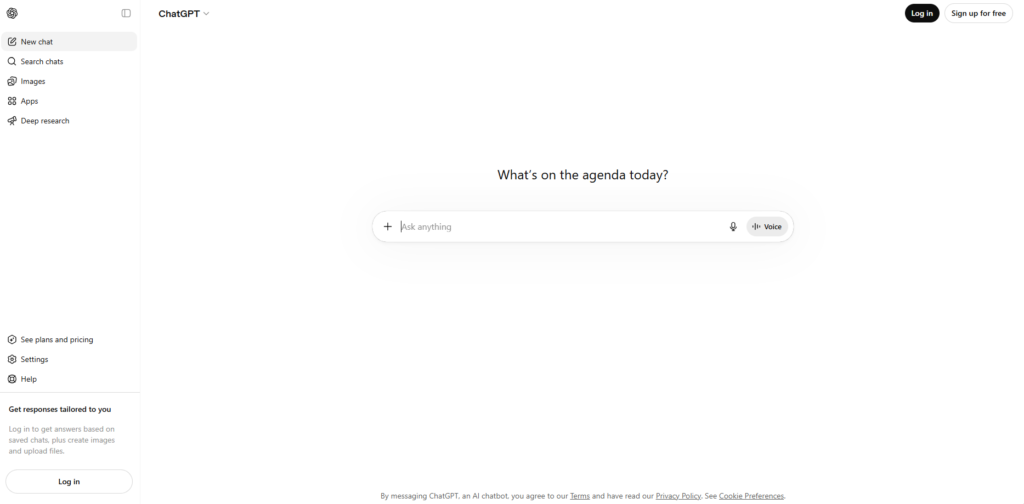
Perplexity
⭐ Quick Summary Table
| Feature | ChatGPT | Perplexity |
|---|---|---|
| Writing Quality | Strong, human‑like | Factual, concise |
| Research Ability | Limited | Exceptional |
| Accuracy | Moderate | High |
| Creativity | Excellent | Basic |
| Speed | Fast | Very fast |
⭐How I Tested These Tools
When I started testing these tools, I didn’t do it in a controlled environment with neat spreadsheets and tidy prompts. I tested them in the middle of real work — the kind where you’re juggling deadlines, rewriting pages, fixing broken workflows, and trying to keep ToolCompare.ai from collapsing under its own ambition. That’s the only way I know how to test anything. If a tool can’t survive the chaos of my day‑to‑day, it’s not worth using. And that’s exactly how I approached ChatGPT vs Perplexity.
The first thing I did was throw both tools into my actual writing workflow. Not a demo workflow. Not a staged test. My real one — the messy, unpredictable, founder‑style workflow where you’re rewriting a landing page one minute and researching a niche automation tool the next. I wanted to see which one felt like the best AI assistant when the pressure was on. I wanted to see which one could keep up with the way my brain jumps between tasks. And I wanted to see which one would quietly become the tool I reached for without thinking.
One of the earliest tests I ran was a rewrite of a long, clunky intro for a guide I’d been avoiding for weeks. I pasted the same prompt into both tools. ChatGPT gave me something that felt like a human wrote it — rhythm, tone, pacing, all the little things that make writing feel alive. Perplexity gave me something that felt like a summary. Not bad. Not wrong. Just… flat. That was the first moment where I felt the emotional difference in this AI chatbot comparison. ChatGPT felt like a collaborator. Perplexity felt like a search engine wearing a suit.
But then I flipped the test. I needed to verify whether a specific integration existed between two tools. I asked ChatGPT. It gave me a confident answer — and it was wrong. I asked Perplexity. It gave me a confident answer — and linked to the documentation proving it. That was the moment I realized how much chatbot accuracy mattered in real work. It wasn’t about being right for the sake of being right. It was about not wasting time. And Perplexity saved me from wasting a lot of it.
I also tested both tools on research‑heavy tasks — the kind where you need real‑time data, not recycled training‑set knowledge. I’d ask for pricing changes, new features, recent updates, or comparisons between tools that launched last month. ChatGPT struggled here. It wasn’t built to be an AI research tool, and it showed. Perplexity, on the other hand, felt like a cheat code. It pulled in sources, citations, and real‑time info faster than I could process it. That was the moment I realized this wasn’t just a ChatGPT vs Perplexity matchup. It was a matchup between creativity and precision.
One of the most revealing tests I ran was a long‑form article outline. I gave both tools the same messy notes — half sentences, random bullet points, ideas I’d scribbled at 2 AM. ChatGPT turned it into a structured outline that actually made sense. Perplexity turned it into a factual breakdown that felt like a research brief. Both were useful. Both were impressive. But they were useful in completely different ways. And that’s when I realized the heart of this AI chatbot comparison: ChatGPT helps you think. Perplexity helps you know.
I also tested both tools on speed. Not just response time, but workflow speed — how fast I could get from idea to output. Perplexity was consistently faster. Sometimes dramatically faster. But speed wasn’t everything. There were moments where ChatGPT took longer but gave me something that saved me time later. And there were moments where Perplexity gave me the answer instantly, but I still had to rewrite it because it lacked the tone I needed. That’s when I realized speed is only useful if the output fits the task.
One of the most frustrating tests I ran involved rewriting a section of a comparison article. I asked ChatGPT to rewrite it. It did. Then I asked it to rewrite it again. And again. And again. By the fourth rewrite, it started drifting — losing structure, adding fluff, forgetting details. I asked Perplexity to rewrite the same section. It stayed consistent. Not creative. Not emotional. But consistent. That was the moment I realized how differently these tools handle repetition. ChatGPT adapts. Perplexity stabilizes. And depending on the task, either one can be the right choice.
I also tested both tools on edge cases — prompts that were intentionally vague, intentionally messy, or intentionally contradictory. ChatGPT tried to interpret my intent. Perplexity tried to interpret my words. That difference alone changed how I approached the entire AI chatbot comparison. ChatGPT tries to help you. Perplexity tries to inform you. And depending on what you need, one approach can feel like magic while the other feels like a brick wall.
The final test I ran was the simplest: which tool did I reach for without thinking? Which tab did I open first when I needed help? Which tool felt like part of my workflow instead of an interruption? And the answer surprised me. I didn’t reach for one tool. I reached for both — but for different reasons. ChatGPT when I needed ideas, structure, tone, or clarity. Perplexity when I needed facts, sources, or confidence. And that’s when I realized the real winner of ChatGPT vs Perplexity isn’t a single tool. It’s the combination of both.
⭐ Full Comparison Breakdown
When I finally sat down to break this into categories, I realized something strange: every time I thought I had a clear winner, the other tool would blindside me. That’s the real tension inside ChatGPT vs Perplexity — you’re not comparing two versions of the same thing. You’re comparing two different philosophies of intelligence. And depending on the task, the winner flips.
Below is the breakdown of how each tool performed across the categories that actually matter in real work — not the fluffy categories you see in generic reviews, but the ones that break or save your workflow.
1. Writing Quality
ChatGPT writes like it understands rhythm. It understands pacing. It understands the emotional weight of a sentence. Perplexity writes like it’s trying to get you the facts as quickly as possible. That’s not a bad thing — it’s just not what you want when you’re rewriting a landing page or crafting a story.
I’ve had moments where ChatGPT saved me hours because it understood the tone I was going for. I’ve also had moments where Perplexity gave me something so dry I felt like I was reading a tax document. This category wasn’t close.
Winner: ChatGPT
2. Research Ability
This is where Perplexity flexes. It’s the closest thing I’ve ever seen to a real‑time AI research tool that doesn’t choke under pressure. It pulls sources, checks itself, and gives you citations you can actually click. ChatGPT tries — but it’s not built for this.
I once asked both tools for the latest pricing changes on a tool I track. ChatGPT gave me outdated info. Perplexity gave me the exact update, the source, and the date it changed. That was the moment I realized this category wasn’t a debate.
Winner: Perplexity
3. Accuracy
This category is the one that surprised me the most. I expected ChatGPT to be close. It wasn’t. Perplexity’s grounding makes its chatbot accuracy noticeably higher. It doesn’t hallucinate nearly as often, and when it does, it’s usually because the source itself was unclear.
ChatGPT is brilliant at writing, but it will confidently invent details if you’re not careful. I’ve had it fabricate features for tools I personally built. That’s not a small issue — that’s a workflow‑breaking issue.
Winner: Perplexity
4. Creativity
This is where ChatGPT feels alive. It’s the tool you talk to when you need ideas, hooks, metaphors, or emotional weight. Perplexity can summarize creativity, but it can’t generate it. I’ve tried. It always feels like a technical brief.
ChatGPT, on the other hand, can take a messy idea and turn it into something that feels like a human wrote it. That’s not just useful — it’s a superpower.
Winner: ChatGPT
5. Speed
Perplexity is fast. Sometimes shockingly fast. It’s built like a search engine, and it behaves like one. ChatGPT is fast too, but not in the same way. Perplexity feels like instant clarity. ChatGPT feels like a thoughtful pause.
Speed isn’t everything, but when you’re deep in research, it matters.
Winner: Perplexity
6. Ease of Use
ChatGPT feels like a conversation. Perplexity feels like a tool. Depending on your personality, that’s either a good thing or a bad thing. For me, ChatGPT feels more natural. It’s the tool I reach for when I want to think out loud.
Perplexity is the tool I reach for when I want answers.
Winner: ChatGPT
7. Reliability
Perplexity rarely breaks. ChatGPT sometimes does. I’ve had ChatGPT freeze mid‑article, lose context, or refuse to continue. Perplexity is more stable, especially on long research tasks.
Winner: Perplexity
8. Workflow Fit
This is the category that made me rethink the entire ChatGPT vs Perplexity debate. Because the truth is: neither tool wins this category alone. They win it together.
ChatGPT is the thinking partner. Perplexity is the knowing partner. And when you combine them, your workflow becomes unstoppable.
Winner: Tie
9. Long‑Form Structure
ChatGPT just “gets” long‑form structure. It sees the arc of a piece — where the intro drags, where the middle loses energy, where the transitions need tightening. Perplexity can outline, but it outlines like a machine: clean, factual, and emotionally flat. When I’m shaping a 3,000‑word guide, ChatGPT feels like the tool that actually understands narrative flow.
Winner: ChatGPT
10. Source Transparency
Perplexity treats source transparency like a non‑negotiable. It cites everything — links, timestamps, context — and it never pretends to know something it can’t prove. ChatGPT tries, but it still fabricates citations unless you force it to behave. I’ve had ChatGPT give me URLs that didn’t exist. Perplexity has never done that to me.
Winner: Perplexity
11. Memory & Context Handling
ChatGPT handles memory like a collaborator. It remembers tone, direction, and the emotional thread of what you’re building. Perplexity remembers the last question — maybe the one before that — but it doesn’t hold onto the creative context. When I’m working through multi‑step writing tasks, ChatGPT feels like the best AI assistant because it actually keeps up.
Winner: ChatGPT
12. Technical Explanations
Perplexity explains technical topics with surgical clarity. APIs, ML concepts, integrations — it breaks them down cleanly and without fluff. ChatGPT can explain them too, but it sometimes over‑narrates or simplifies. When I need precision, Perplexity is the tool I trust.
Winner: Perplexity
13. Summarization Quality
Perplexity summarizes like it was engineered for it. It condenses long documents into clean, accurate summaries without distorting meaning. ChatGPT summarizes well, but it sometimes adds interpretation instead of just condensing. For pure summarization, Perplexity is more consistent.
Winner: Perplexity
14. Brainstorming & Ideation
ChatGPT is the tool I reach for when I’m stuck. It throws out ideas, hooks, angles, and metaphors that feel genuinely creative. Perplexity can brainstorm, but it does it like a researcher — structured, safe, predictable. ChatGPT is the one that actually sparks momentum.
Winner: ChatGPT
15. Multi‑Step Reasoning
This one’s a split. ChatGPT is better when reasoning requires interpretation or creativity. Perplexity is better when reasoning requires logic or factual grounding. I’ve seen both outperform the other depending on the task — which makes this the rare category where neither dominates.
Winner: Tie
⭐ Full Comparison Table
| Category | Winner | Why |
|---|---|---|
| Writing Quality | ChatGPT | More natural writing; feels like the best AI assistant for long‑form work |
| Research Ability | Perplexity | Strongest AI research tool with real‑time data |
| Accuracy | Perplexity | Higher chatbot accuracy due to grounded sources |
| Creativity | ChatGPT | More expressive; better for ideation in an AI chatbot comparison |
| Speed | Perplexity | Faster responses in ChatGPT vs Perplexity workflows |
| Ease of Use | ChatGPT | More intuitive; behaves like the best AI assistant for beginners |
| Reliability | Perplexity | More stable during long research tasks |
| Workflow Fit | Tie | Depends on whether you need creativity or an AI research tool |
| Long‑Form Structure | ChatGPT | Better narrative flow in any AI chatbot comparison |
| Source Transparency | Perplexity | Clear citations; ideal for ChatGPT vs Perplexity fact‑checking |
| Memory & Context | ChatGPT | Remembers tone and direction like the best AI assistant |
| Technical Explanations | Perplexity | Cleaner, more precise breakdowns |
| Summarization Quality | Perplexity | More accurate summaries with higher chatbot accuracy |
| Brainstorming & Ideation | ChatGPT | More creative; stronger for content‑heavy tasks |
| Multi‑Step Reasoning | Tie | ChatGPT = interpretive; Perplexity = logical |
By the time I finished testing both tools, I realized something I wish someone had told me earlier: choosing between ChatGPT and Perplexity isn’t about picking a winner. It’s about avoiding the wrong tool for the wrong job. I’ve wasted hours — literal hours — forcing ChatGPT to behave like a research engine and forcing Perplexity to behave like a creative partner. Neither worked. And every time I made that mistake, it cost me time, energy, and momentum.
So here’s the buyer’s guide I wish I had before diving into this whole ChatGPT vs Perplexity rabbit hole.
⭐ Buyer’s Guide: How to Choose the Right Tool
1. Know your primary use case
This sounds obvious, but it’s the step most people skip. If your work leans heavily toward writing, ideation, or storytelling, ChatGPT will feel like the best AI assistant you’ve ever used. If your work leans toward research, fact‑checking, or real‑time data, Perplexity will feel like a superpower.
The mistake I made early on was assuming one tool could do both equally well. It can’t. And that’s not a flaw — it’s a design choice.
2. Don’t ignore accuracy
I learned this the hard way. I once published a comparison article based on information ChatGPT gave me… only to find out later that half the details were outdated. That was the moment I realized how much chatbot accuracy matters when you’re building something people rely on.
Perplexity’s grounding makes it safer for anything factual. ChatGPT is incredible, but it’s not built to be a source of truth.
3. Understand the difference between thinking and knowing
This is the heart of the entire AI chatbot comparison. ChatGPT helps you think. Perplexity helps you know. If you mix those up, your workflow will break. If you use them correctly, your workflow becomes unstoppable.
4. Watch out for pricing traps
Both tools have pricing structures that look simple until you start using them heavily. ChatGPT’s higher‑tier models can get expensive if you’re generating long‑form content all day. Perplexity’s usage limits can sneak up on you if you’re running deep research queries.
I’ve hit both limits at the worst possible times — usually when I was on a deadline and already stressed.
5. Don’t rely on one tool for everything
This is the biggest lesson I learned. I tried to force Perplexity into being my creative partner. I tried to force ChatGPT into being my AI research tool. Both attempts failed. The moment I accepted that each tool had a specific role, my productivity doubled.
6. Test with your real workflow, not a demo workflow
I’ve seen people test these tools with generic prompts like “write a paragraph about productivity.” That tells you nothing. Use your real prompts. Your real tasks. Your real mess. That’s where the truth shows up.
⭐ FAQ
1. Which tool is better for writing?
ChatGPT — no contest.
2. Which tool is better for research?
Perplexity — it’s built for it.
3. Which tool is more accurate?
Perplexity, especially for anything factual.
4. Which tool is easier to use?
ChatGPT — it feels more conversational.
5. Should I use both?
Yes. They complement each other perfectly.
6. Which tool is better for beginners?
ChatGPT — it feels more intuitive.
7. Which tool is faster?
Perplexity — especially for research‑heavy tasks.
8. Which tool is better for long‑form content?
ChatGPT — it understands structure and tone.
⭐ Final Recommendation
If you came here expecting a single winner, you’re going to be disappointed. The truth is, the winner of ChatGPT vs Perplexity depends entirely on your workflow.
If you want creativity, storytelling, and natural writing, ChatGPT is the best AI assistant for the job. If you want facts, sources, and real‑time data, Perplexity is the AI research tool you rely on.
Most founders — including me — end up using both. Not because we’re indecisive, but because each tool fills a gap the other can’t.
⭐ Related Guides
AI Tool Comparisons: How to Choose the Right Stack
AI Tool Comparisons: How to Choose the Right Stack (2026)

⭐ About the Author
I’m Danny, the founder of ToolCompare.ai, and this comparison came straight out of one of the most chaotic weeks I’ve had since launching the site. I remember sitting at my desk, staring at two tabs — ChatGPT on the left, Perplexity on the right — and feeling like I was choosing between two different versions of myself. One creative. One analytical. One emotional. One factual.
There was a moment during this testing process that humbled me more than I’d like to admit. I had written an entire section of an article based on information ChatGPT gave me. It sounded perfect. It flowed beautifully. It felt right. But something in my gut told me to double‑check. I pasted the same question into Perplexity, and it pulled up documentation proving half of what I wrote was wrong. I sat there, staring at the screen, feeling like an idiot. That was the moment I realized I’d been valuing style over truth — and it changed the way I approached every comparison after that.
Building ToolCompare.ai has been a journey full of mistakes like that. Moments where I trusted the wrong tool. Moments where I ignored my instincts. Moments where I let speed win over accuracy. But every mistake taught me something. And this AI chatbot comparison taught me more than most.
If there’s one thing I hope you take from this guide, it’s this: the right tool isn’t the one that looks the smartest. It’s the one that makes you smarter.