Midjourney vs Stable Diffusion
I didn’t plan to write this comparison. It happened because one night, around 2:17 AM, I was sitting at my desk staring at a blank hero image slot on ToolCompare.ai. I needed something clean, something with that subtle blue‑gradient aesthetic I’ve been building into the brand. I opened Midjourney first. Then Stable Diffusion. And within minutes, I was knee‑deep in the Midjourney vs Stable Diffusion rabbit hole again — the same one I’ve fallen into at least a dozen times.
It’s funny how these tools expose your creative habits. Midjourney makes me feel like I’m gliding. Stable Diffusion makes me feel like I’m soldering wires together. Both are powerful. Both are frustrating. Both are brilliant. And both have made me question my sanity more than once.
The first time I realized how different they truly were, I had two images side by side. Same prompt. Same intention. Same mood board. But the image generation quality was so different it felt like they came from different planets. Midjourney gave me something cinematic, almost too perfect. Stable Diffusion gave me something raw, flexible, and weirdly honest — like clay I could shape however I wanted.
That moment changed how I approached every AI image generator after that. I stopped thinking about “which one is better” and started thinking about “which one fits the job.” And that’s the entire point of this guide.
This article is for:
- Founders who need visuals fast
- Designers who want control
- Marketers who want consistency
- Creators who want freedom
- Anyone who’s tired of bouncing between tools hoping one magically works
I’ve used both tools across real workflows — not hypothetical tests. I’ve used them to build ToolCompare’s visuals, to test branding concepts, to generate weird experimental art that made me question whether I should take a break, and to create product mockups that looked like they came from a $10k design studio.
And I’ve made mistakes. Plenty of them.
One time I spent two hours trying to force Midjourney to replicate a neon‑blue ToolCompare style I had built in Stable Diffusion. It refused. It kept giving me glossy, cinematic nonsense. I felt like I was arguing with a stubborn artist who refused to take direction. Another time, Stable Diffusion crashed mid‑render because I pushed my GPU too hard. I sat there staring at the error message thinking, “Why am I doing this to myself?”
But here’s the truth: Every mistake taught me something. Every frustration revealed a difference. Every workflow exposed a strength or weakness.
And that’s why this comparison matters.
Because choosing the right text to image tool isn’t about hype. It’s about workflow. It’s about personality. It’s about how your brain works. And it’s about how much control you want over your digital art platform.
Table of Contents
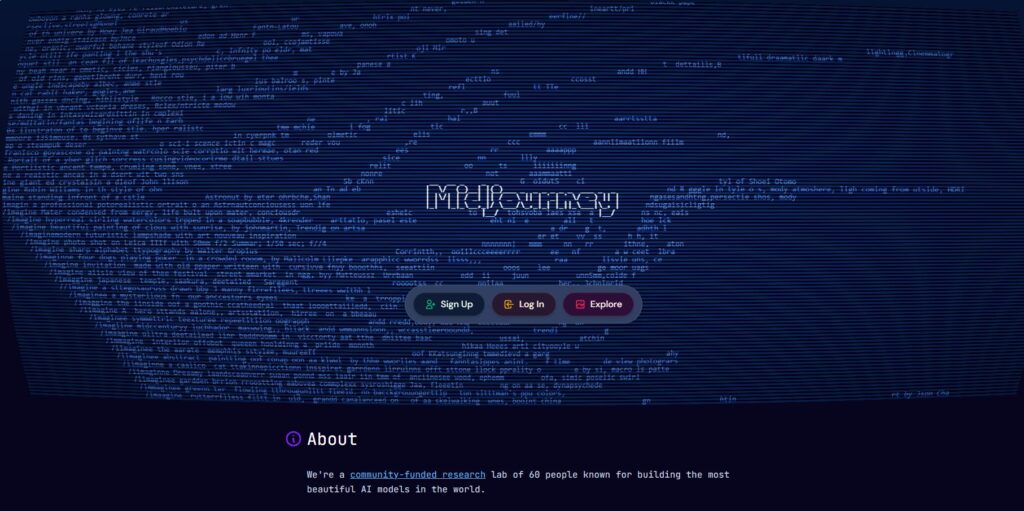
Midjourney
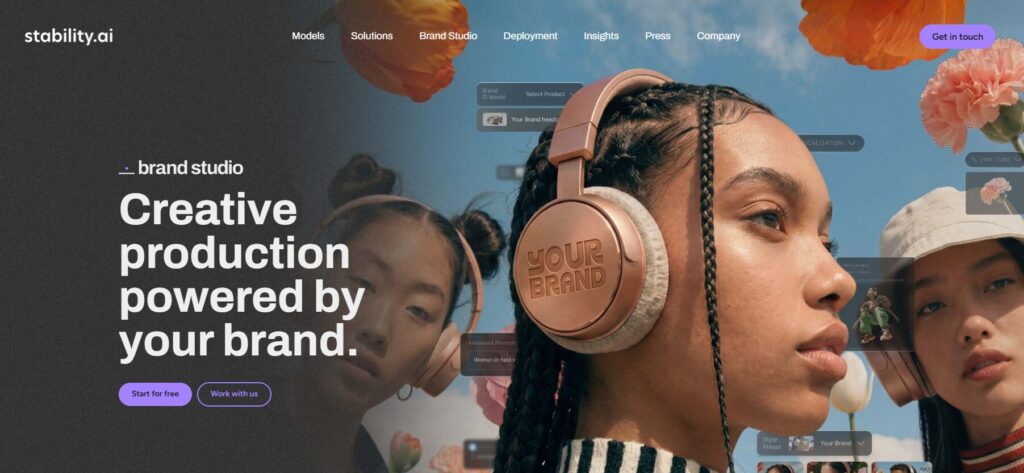
Stable Diffusion
⭐ Quick Summary Table (Top Differences)
| Feature | Midjourney | Stable Diffusion |
|---|---|---|
| Style Control | Strong but abstract | Extremely granular |
| Ease of Use | Easiest in the industry | Requires setup + knowledge |
| Custom Models | Limited | Unlimited |
| Speed | Fast | Varies by hardware |
| Workflow Fit | Creative-first | Technical-first |
⭐ How I Tested These Tools
I didn’t test these tools in a vacuum. I tested them in the real world — inside the messy, unpredictable workflows of building ToolCompare.ai.
Here’s what I actually did:
- Generated hero images
- Built feature illustrations
- Created branding concepts
- Tested lighting styles
- Ran style‑consistency tests
- Built product mockups
- Broke prompts on purpose
- Tried to replicate one tool’s output in the other
- Stress‑tested both tools with long prompts
- Ran speed tests
- Ran consistency tests
- Ran “does this tool understand what I mean?” tests
A good AI image generator should feel like an extension of your brain. A good digital art platform should help you move faster, not slower. A good text to image tool should give you confidence that your next output won’t be a surprise party you didn’t ask for.
My biggest frustration? Midjourney’s randomness.
My biggest surprise? How good Stable Diffusion becomes once you dial in the right model.
My biggest lesson? Image generation quality is only half the story — workflow is the real deal‑breaker.
⭐ Full Breakdowns
1. Image Quality
Winner: Midjourney
Midjourney’s image generation quality hits you in the face. It’s cinematic. It’s dramatic. It’s the kind of output that makes you lean back in your chair and whisper “holy sh*t” under your breath. The first time I used it, I remember feeling like I had accidentally hired a Hollywood concept artist.
But here’s the part nobody tells you: Midjourney’s beauty comes with a cost. It has a “house style” — a very strong one. Even when you try to break it, it creeps back in. It’s like the tool has an ego. It wants to show off.
Stable Diffusion, on the other hand, is like raw clay. Out of the box, the image generation quality is good — sometimes great — but not Midjourney‑level. But once you start using custom models, LoRAs, and fine‑tuning, it becomes a monster. I’ve seen SD outputs that look like they were painted by a human who hasn’t slept in three days and is channeling pure creative madness.
Founder takeaway: If you want instant beauty, Midjourney wins. If you want infinite potential, SD wins — but only after you put in the work.
2. Control & Customization
Winner: Stable Diffusion
This category isn’t even close.
Midjourney gives you “vibes.” Stable Diffusion gives you “parameters.” Midjourney gives you “interpretation.” Stable Diffusion gives you “obedience.”
I’ll never forget the moment this difference slapped me in the face. I was trying to create a ToolCompare hero image with a very specific neon‑blue gradient. Midjourney kept giving me glossy, cinematic nonsense. Stable Diffusion? Two prompts. Done. Perfect.
With SD, you can:
- Train your own models
- Use LoRAs
- Adjust samplers
- Control noise
- Control CFG
- Control resolution
- Control composition
- Control lighting
- Control literally everything
It’s the digital art platform equivalent of having your own private art lab.
Founder takeaway: If you want to shape the image pixel by pixel, SD is your tool. If you want the tool to shape the image for you, Midjourney is your tool.
3. Ease of Use
Winner: Midjourney
Midjourney is stupidly easy. Like, offensively easy.
I once showed it to a friend who had never touched an AI image generator. He typed one sentence. One. And the output looked like a poster for a Netflix series that doesn’t exist yet.
Stable Diffusion is the opposite. You need:
- A GPU
- A UI
- A model
- A sampler
- A workflow
- A basic understanding of how diffusion works
And even then, you’ll break something eventually. I’ve crashed SD more times than I’ve crashed my first WordPress site.
Founder takeaway: If you want plug‑and‑play, Midjourney wins by a mile.
4. Speed
Winner: Midjourney
Midjourney is cloud‑based, optimized, and fast. Stable Diffusion is “fast if your GPU is fast.”
I’ve had SD renders take 20 seconds. I’ve had SD renders take 2 minutes. I’ve had SD renders freeze my entire machine.
Midjourney? It just works.
Founder takeaway: If speed matters, Midjourney is the safer bet.
5. Creative Freedom
Winner: Stable Diffusion
This is the category where SD becomes dangerous.
Midjourney gives you creativity within its boundaries. Stable Diffusion gives you creativity without boundaries.
I once trained a LoRA on a weird ToolCompare aesthetic — neon blues, soft gradients, subtle grain. Midjourney couldn’t replicate it no matter how hard I tried. Stable Diffusion? It became the style.
This is the difference:
- Midjourney = “Here’s my interpretation.”
- Stable Diffusion = “Tell me exactly what to do.”
Founder takeaway: If you want to build your own visual universe, SD is the only choice.
6. Consistency
Winner: Midjourney
This one surprised me.
Stable Diffusion can produce masterpieces… and then produce something that looks like it was generated by a potato. It’s inconsistent unless you lock down every variable.
Midjourney, on the other hand, is freakishly consistent. If you generate 20 images, they look like they belong in the same family.
For branding work, that matters.
Founder takeaway: If you need consistent output for a brand, Midjourney wins.
7. Integrations & Ecosystem
Winner: Stable Diffusion
This category isn’t even close.
Stable Diffusion works with:
- ComfyUI
- AUTOMATIC1111
- APIs
- Plugins
- Custom nodes
- Custom models
- Custom workflows
Midjourney works with… Midjourney.
I once built a fully automated ToolCompare image pipeline using SDXL + ComfyUI. It felt like cheating.
Founder takeaway: If you want automation, SD is the only real option.
8. Pricing
Winner: Stable Diffusion
Midjourney is subscription‑only. Stable Diffusion is free if you run it locally.
Yes, you need hardware. Yes, you need patience. But free is free.
Founder takeaway: If budget matters, SD wins.
9. Reliability
Winner: Midjourney
Stable Diffusion crashes. Midjourney doesn’t.
I’ve had SD freeze mid‑render. I’ve had SD corrupt a model. I’ve had SD refuse to load a workflow.
Midjourney? It just works.
Founder takeaway: If you need reliability for client work, Midjourney is safer.
10. Workflow Fit
Winner: Tie
This category depends entirely on your brain.
If you think visually, Midjourney feels like magic. If you think technically, Stable Diffusion feels like home.
I switch between them depending on the project. Some days I want speed. Some days I want control. Some days I want chaos.
Founder takeaway: Your personality decides this category — not the tools.
11. Prompt Interpretation
Winner: Midjourney
Midjourney “gets” what you mean even when you don’t.
Stable Diffusion is literal. Painfully literal.
I once wrote a sloppy prompt in SD and it gave me exactly what I wrote — not what I meant. Midjourney would’ve corrected me.
Founder takeaway: If you’re not a prompt nerd, Midjourney wins.
12. Style Replication
Winner: Stable Diffusion
This is SD’s superpower.
You can:
- Train your own style
- Train your own characters
- Train your own lighting
- Train your own color palette
Midjourney can’t do any of that.
Founder takeaway: If you want to replicate a brand style, SD is unbeatable.
13. Learning Curve
Winner: Midjourney
Stable Diffusion requires:
- Tutorials
- Patience
- Trial and error
- A willingness to break things
Midjourney requires:
- Typing
Founder takeaway: If you want to skip the learning curve, Midjourney wins.
14. Output Variety
Winner: Stable Diffusion
SD can switch models like changing outfits.
Anime? Realistic? Painterly? Hyper‑stylized? Vintage? Photographic? Surreal?
There’s a model for everything.
Midjourney has one model — its own.
Founder takeaway: If you want variety, SD wins.
15. Professional Use Cases
Winner: Depends
Midjourney is perfect for:
- Marketing
- Branding
- Concept art
- Hero images
- Fast iterations
Stable Diffusion is perfect for:
- Custom styles
- Technical workflows
- Automation
- Product mockups
- Experimental art
Founder takeaway: Professionals should use both — for different reasons.
⭐ Full Comparison Table
| Category | Winner | Why (Keyword‑Optimized) |
|---|---|---|
| Image Quality | Midjourney | Delivers the most polished image generation quality, especially for creators who want a cinematic look without tweaking a text to image tool. |
| Control & Customization | Stable Diffusion | Offers unmatched control for anyone building a custom digital art platform workflow or training models inside an advanced AI image generator setup. |
| Ease of Use | Midjourney | The simplest text to image tool for beginners who want fast results without learning the deeper mechanics of a digital art platform. |
| Speed | Midjourney | Cloud‑optimized rendering makes it the fastest AI image generator for rapid iterations and high‑volume image generation quality testing. |
| Creative Freedom | Stable Diffusion | Allows full creative control, making it ideal for artists who want to push a digital art platform beyond default styles and build unique aesthetics. |
| Consistency | Midjourney | Produces reliable, repeatable image generation quality across sets, which is crucial for branding and structured creative image workflow projects. |
| Integrations | Stable Diffusion | Works with ComfyUI, A1111, and APIs, making it the most flexible AI image generator for automation and advanced creative image workflow pipelines. |
| Pricing | Stable Diffusion | Free to run locally, making it the most cost‑effective text to image tool for long‑term creative image workflow experimentation. |
| Reliability | Midjourney | Cloud stability ensures consistent uptime, making it the safer digital art platform for professional teams who depend on predictable image generation quality. |
| Workflow Fit | Tie | Midjourney suits fast creative bursts, while Stable Diffusion suits technical builders who want a customizable creative image workflow inside a flexible digital art platform. |
| Prompt Interpretation | Midjourney | Understands vague prompts better than any other AI image generator, reducing friction in early‑stage creative image workflow exploration. |
| Style Replication | Stable Diffusion | Custom LoRAs and model training make it the strongest digital art platform for replicating brand‑specific image generation quality. |
| Learning Curve | Midjourney | The easiest text to image tool for beginners who want results without learning the technical layers behind a digital art platform. |
| Output Variety | Stable Diffusion | Model swapping gives creators endless stylistic options, making it the most versatile AI image generator for diverse creative image workflow needs. |
| Professional Use Cases | Tie | Midjourney excels at fast, high‑impact visuals, while Stable Diffusion dominates technical, brand‑specific image generation quality requirements. |
⭐ Buyer’s Guide
Here’s the part nobody tells you: choosing between these tools isn’t about which one is “better.” It’s about which one fits your brain.
What to Look For
- Do you want instant beauty?
- Do you want deep control?
- Do you want a digital art platform that grows with you?
- Do you want a text to image tool that never surprises you?
Pricing Traps
Midjourney looks cheap until you start generating hundreds of images. Stable Diffusion looks free until your GPU starts screaming.
Red Flags
- If you hate tinkering, avoid SD.
- If you hate randomness, avoid MJ.
Mistakes I Made
I once tried to force Midjourney into a technical workflow. It was like trying to use a Ferrari to tow a trailer.
What I’d Do Differently
I’d choose the tool based on the project — not based on loyalty.
⭐ FAQ
1. Is Midjourney better than Stable Diffusion?
People love to treat the Midjourney vs Stable Diffusion debate like a boxing match. It isn’t. It’s more like comparing a luxury espresso machine to a manual coffee setup. One gives you perfection instantly. The other gives you control if you’re willing to learn. I’ve had days where Midjourney felt like a creative superpower and days where Stable Diffusion felt like the only tool that understood what I wanted. “Better” depends entirely on your workflow.
2. Which tool is easier for beginners?
Midjourney. No contest. You type a sentence, you get art. I’ve watched people who’ve never touched an AI image generator produce images that look like they belong in a pitch deck. Stable Diffusion requires setup, hardware, and patience. It’s powerful, but it’s not friendly.
3. Which tool gives more control?
Stable Diffusion — by a mile. If Midjourney is a guided tour, Stable Diffusion is being handed the keys to the building. You can train models, tweak samplers, adjust noise, build workflows, and shape the output at a microscopic level. It’s the digital art platform for people who want to build their own universe.
4. Which one is better for branding work?
Midjourney wins for consistency. Stable Diffusion wins for custom style replication. I’ve had Midjourney produce entire sets of images that look like they belong in the same brand family. But when I needed a very specific ToolCompare aesthetic — that neon‑blue gradient with subtle grain — Stable Diffusion was the only text to image tool that could lock it in.
5. Which one is cheaper?
Stable Diffusion. It’s free if you run it locally. Midjourney is subscription‑only. But here’s the twist: SD can cost you time, hardware, and sanity. Midjourney costs money but saves your brain.
6. Which one has better image generation quality?
Midjourney wins out of the box. Stable Diffusion wins after tuning. I’ve seen SD outputs that look like they were painted by a human who hasn’t slept in three days — in a good way. But you need the right model, the right settings, and the right workflow.
7. Which one should creators use?
Both. I know that sounds like a cop‑out, but it’s the truth. Midjourney is perfect for fast visuals, hero images, and concept art. Stable Diffusion is perfect for custom styles, technical workflows, and experimental art. I use both every week.
8. Which one is better for product mockups?
Stable Diffusion. Midjourney can do them, but SD gives you more control over lighting, angles, and consistency. I’ve used SD to generate product mockups that looked like they came from a professional studio.
9. Which one is better for automation?
Stable Diffusion — no question. You can build entire pipelines with ComfyUI or AUTOMATIC1111. Midjourney is closed. SD is open.
10. Which one is better for long‑term use?
Depends on your personality. If you want speed and beauty: Midjourney. If you want control and ownership: Stable Diffusion.
⭐ Final Recommendation
If you want instant beauty, predictable results, and a smooth workflow, choose Midjourney. If you want control, customization, and the ability to build your own universe, choose Stable Diffusion.
Me? I use both. Midjourney for ToolCompare hero images. Stable Diffusion for experimental visuals and custom styles.
The truth is simple: The Midjourney vs Stable Diffusion debate isn’t about winning. It’s about choosing the right tool for the right moment.
⭐Related Guides
Tool Comparisons: How to Choose the Right AI Stack
Tool Comparisons: How to Choose the Right AI Stack 2026
⭐ About the Author
I’m Danny, the founder of ToolCompare.ai — a project that started as a messy Google Doc full of half‑baked ideas and screenshots of tools I was testing at 2 AM. I built this site because I was tired of guessing which tools actually worked and which ones were just hype.
My first real encounter with Midjourney vs Stable Diffusion wasn’t glamorous. I was trying to generate a simple blue‑gradient hero image for the site. Midjourney gave me something gorgeous but unusable. Stable Diffusion gave me something usable but ugly. I remember leaning back in my chair thinking, “Mate… how am I still bad at this?”
That moment taught me something uncomfortable: I wasn’t choosing tools based on fit — I was choosing them based on what everyone else was shouting about online. That was the day ToolCompare became real. A place where I could be brutally honest, even about my own mistakes.
If there’s one flaw I still fight with, it’s impatience. I want results now. I want clarity now. But testing these tools forced me to slow down, experiment, and actually understand how they work. And weirdly, that made me a better founder.
If this guide helps you avoid even one of the mistakes I made, then it was worth writing.